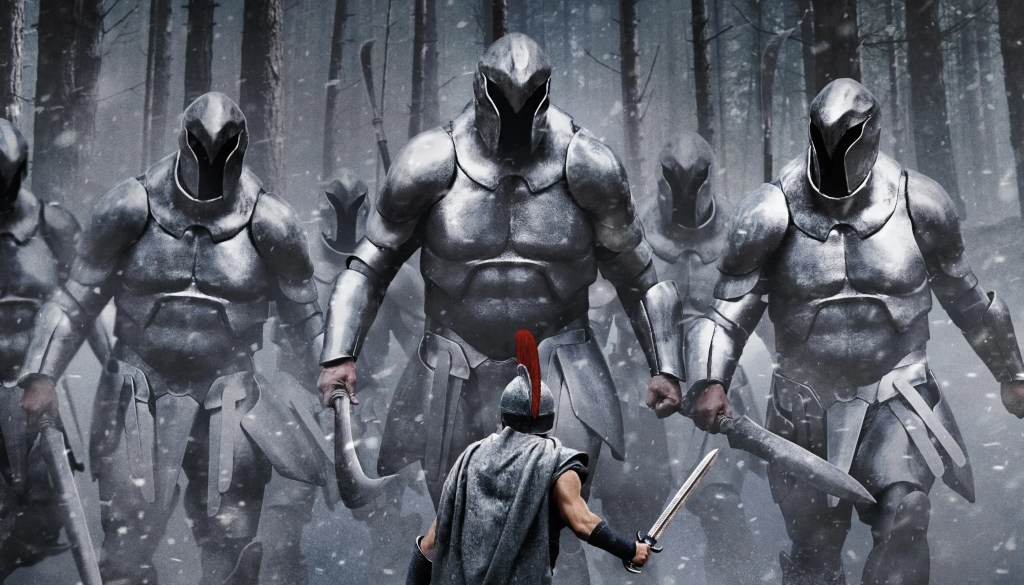
Is Christopher Nolan the Stanley Kubrick of the 21st century?
It would be convenient if he was, since Kubrick’s final film Eyes Wide Shut was released in 1999, just one year after Nolan’s modest debut Following emerged. Certainly they have come to represent some very similar tendencies, chiefly by becoming so popular with the film crowd that their names alone promote their work. They have both demonstrated a capacity to shift genres as well, from war films to science fiction to historical drama. They are alike in that, to a large degree, they ultimately act as genres unto themselves. They share big, deliberate camera work and cool, considered character arcs. Some might call both their films cold, but personally I think a better word might be ‘deliberate’.
Nolan in particular has found quite astonishing commercial success, which has built his reputation sufficiently that his audience will follow him anywhere. The Dunkirk evacuation presented over three shifting timelines? $550 million. A biography of a nuclear physicist? $980 million. A big-budget adaptation of a near-three thousand year-old poem? $1.8 billion. The success of The Odyssey has been so enormous in commercial terms, and its audience so extensive, that reviewing it now almost seems pointless. If you’re reading it, you have mostly likely seen it yourself and formed your own opinions.
Certainly, Nolan’s Odyssey is a visual marvel. In adapting Homer’s poem into a feature film he has captured stunning imagery, deeply atmospheric locations, and iconic characters. In its best scenes it stands among Nolan at his very best. The legendary trojan horse – actually from Homer’s Iliad, but who’s scoring? – looks phenomenal. Odysseus and his men’s encounter with the cyclops Polyphemus is an absolute standout: I don’t think the creature has ever been more effectively realised on screen.
Nolan also makes a deliberate and smart choice to set his Odyssey in a world where gods are real, and interact with mortal humans all of the time. Odysseus (a muscular Matt Damon) periodically sees the goddess Athena (Zendaya, seemingly in everything this year) without questioning it. When his band of warriors encounter the cyclops, or sirens, or a witch, it is not with the terror of the supernatural but with the understandable fear of dying at the hands of something natural. It is true that Nolan could push the fantastical elements much further than he does, but he is already a long, much-appreciated way from the likes of Wolfgang Petersen’s Troy (2004).
As is the case with all of Nolan’s films in recent years, he benefits from a large budget that can afford top-notch and high-profile stars. Matt Damon is remarkably solid, and proves more at ease than he was playing at swords in The Last Duel (2021). Tom Holland is particularly strong as Odysseus’ son Telemachus, which is not the most enjoyable of roles but benefits from his performance. John Leguizamo and Jon Bernthal are excellent. The female cast, which is more extensive than in many films of this sword-and-sandals genre, is sorely underused: Charlize Theron, Lupita Nyong’o, and particular Samantha Morton make striking impressions in limited scenes, and leave the viewer wanting more of them. Anne Hathaway, in the largest female role as Odysseus’ wife Penelope, risks cementing crying as her raison d’être – assuming she has not done so already.
It is inevitably a different experience to the theatrical one when viewed on a television set. The visual and aural impact is inevitably lessened by comparison, and the viewer’s focus will fall instead onto matters of plot, story, and character. It is hard not to notice the film’s slightly frustrating non-linear story structure, which seems to exist so that by the time Odysseus returns home to Ithaca for the final act the audience knows what awaits him there. It winds up more complicated than that, of course, jumping from Odysseus on Ogigyia to Penelope and Telemachus on Ithica to Odysseus at Troy to Odysseus on the open ocean, and back and forth again. Perhaps it is also Nolan’s attempt to break up the original poem’s episodic narrative; if so it replaces potential frustration with occasional confusion, and a growing sense that the film is too long for its own good.
It is a stunning-looking film, even on home video. It is also a slightly disappointing one, stretched too thin for its own good so that instead of one large spectacle it more accurately resembles ten smaller ones.


Leave a Reply