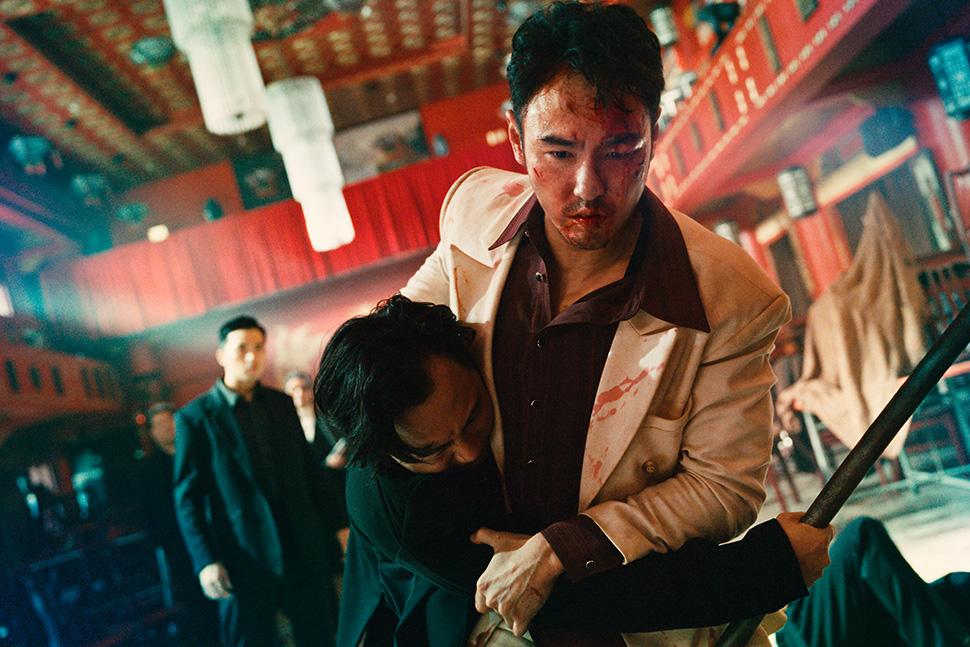
It has been a while between drinks for Japanese filmmaker Sabu (real name Tanaka Hiroyuki). His last feature, My Blood & Bones in a Flowing Galaxy, was released in Japan six years ago. It has been even longer since his fans got to see the sort of absurd criminal comedy with which he initially forged his reputation, with titles like Monday (2000) and Drive (2002) remaining international cult favourites. They are likely to be overjoyed by the arrival of Arrested Memory, which feels like the most innately “Sabu-esque” of his films in a very long time.
Lee (Ethan Juan), a well-regarded Taiwanese police detective reeling with guilt over his last criminal case, suffers a catastrophic loss of memory while engaged in his latest mission: the kidnapping of a wealthy Japanese businessman’s child. While Lee goes missing with the ransom money in a bag, his own squad assume he has gone rogue. His case somehow gets taken over by a drug addict off the streets. The kidnappers desperately work to locate their missing ransom. The criminal cartel to whom the kidnappers owe money are on the hunt for the kidnappers. Multiple forces – all seemingly incompetent – circle around one missing detective, and he cannot even remember who he is.
For Sabu’s audience this is a wonderfully funny and engaging delight. For those less familiar with his earlier works, it may come as a surprise. Arrested Memory is a charming piece of deadpan absurdism: knowingly silly, but conducted with the straightest of faces. The plot is a work of sound and fury, with each rival faction desperate to succeed but crippled by incompetence. Everything is performed with the greatest of gravitas. Ethan Juan is a strong lead who makes a decent character out of what largely seems a lack of one. For much of the film he is paired with Moon Lee as Hua, a suicidal young woman drawn into his predicament. Tsutsumi Shinichi, who starred in all of Sabu’s earlier films, graduates to a showcased supporting role here: either way it is great to see him and his director working together again. He plays the enraged father of the kidnapped child with great force and volume.
A particular highlight among the cast is Hsieh Ying-shiuan, playing Tsutsumi’s long-suffering translator. She is a comic gem throughout, displaying remarkable timing and a tremendously funny manner.
The film is more a comedy than anything else, but Sabu still finds room for scenes of action, martial arts, and drama – and even a brief musical number. It is the way he juggles tones and genres in a broadly comedic manner that makes him so effective at this kind of a film.
The film was shot and is set in Taiwan, after attempts to shoot in several other countries floundered. While it does give things a slightly fresh angle, given the plot one North Asian city at night rather feels like a lot of others. Its greatest contribution to the film is in the casting: some of the country’s best actors are represented here.
Sometimes when a director attempts to recapture their early successes, the result can be anything from underwhelming to outright embarrassing. Sabu has nothing to worry about with Arrested Memory. This is distinctive, funny stuff, and a welcome return to the style of cinema that scored him his reputation in the first place.
Arrested Memory premiered at the Biennale de Venezia. For more information on the film, click here.



Leave a Reply