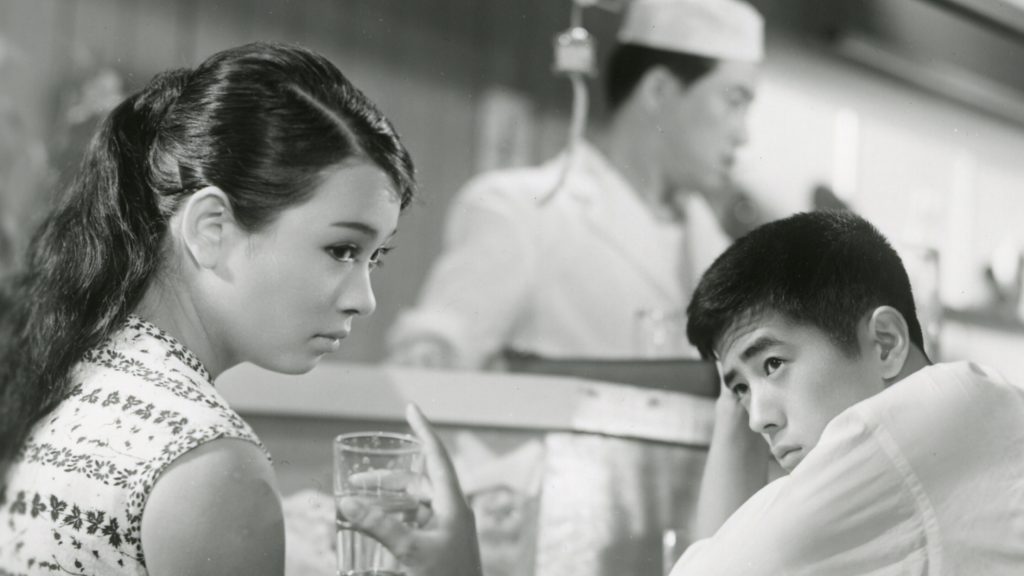
This weekend I had the immense privilege of introducing Masumura Yasuzo’s The Wife of Seisaku at the 2026 Cinema Reborn festival. Here is the written draft that I relied on when speaking.
So let’s talk about Masumura Yasuzo, a director that Oshima Nagisa described as a pioneer of Japanese modernism. The Japanese director Aoyama Shinji, whose film Eureka is getting a revival at Cannes this year, called Masumura ‘the most important filmmaker in the history of postwar Japanese cinema’. Between 1957 and 1982 he directed 58 feature films, the majority of them for the Daiei film studio. The best known include The Blue Sky Maiden, Giants and Toys, Black Test Car, and Blind Beast. Despite a long career, a strong reputation, and a number of genuinely brilliant films, he remains unfairly obscure among international audiences. Most of his films are unavailable with English subtitles. Despite close associations with some of the greatest directors in both Japan and Europe, most scholars, critics, and film historians don’t even know his name. Today’s screening is a valuable opportunity.
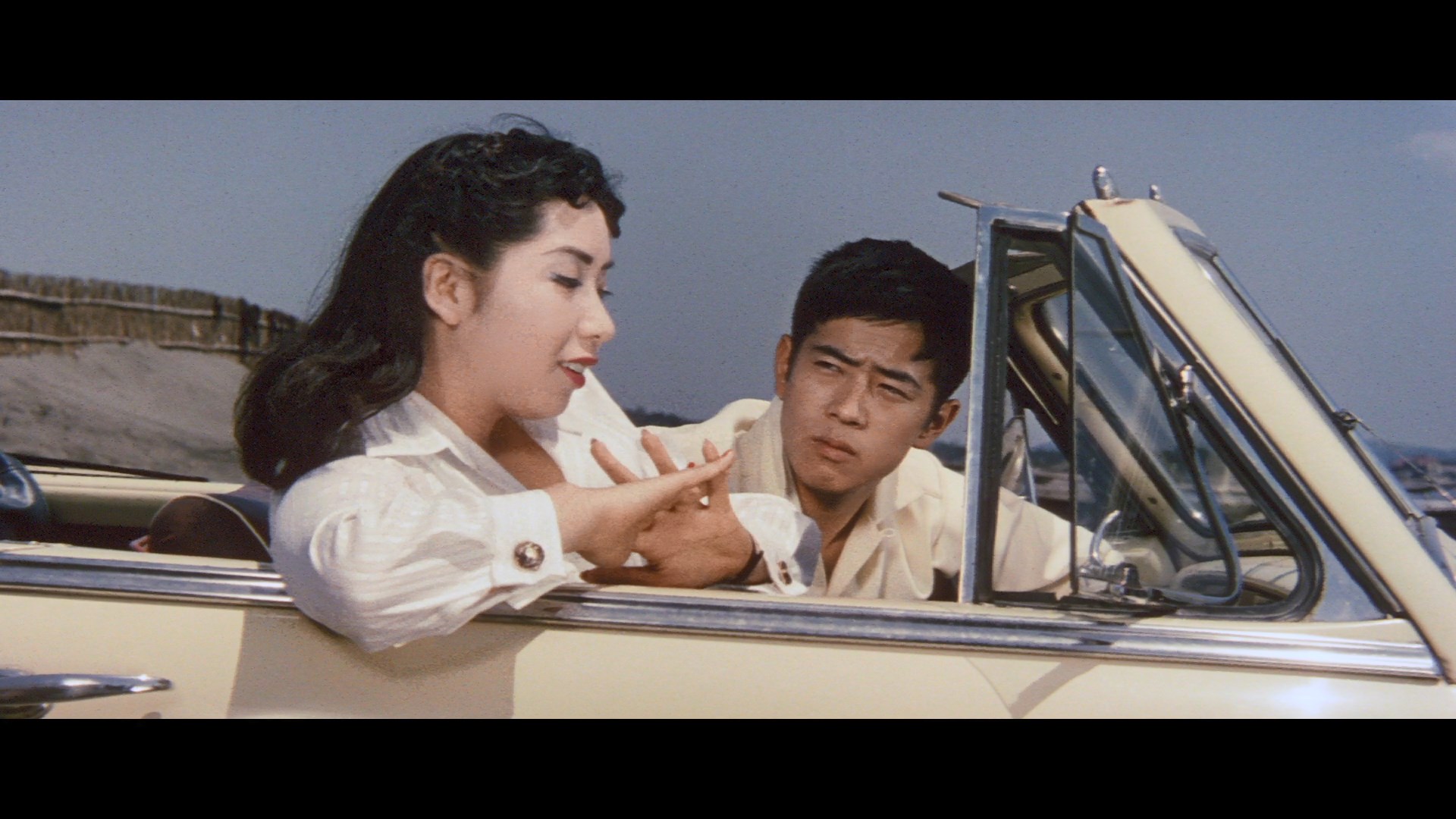
Masumura Yasuzo was born in 1924 in the city of Kofu, about two hours west of Tokyo. He was born into a time when Japan’s left-wing political groups were violently suppressed, and radical right-wing groups – inspired by fascism and nationalism – were on the ascent. Japan invaded northern China when he was seven years old. The second Sino-Japanese War was declared when he was thirteen, and the Imperial Japanese Navy bombed Pearl Harbor when he was seventeen.
It is a lucky quirk of Masumura’s birthdate that he was too young to participate in Japan’s wars in the Asia-Pacific. He was conscripted into the army in the final months of World War II, but never saw active service. Japan announced its surrender to the United States 10 days before his twenty-first birthday.
He grew up a fan of cinema: despite completing a law degree he never practised. He did, however, study with and befriend Hiraoka Kimitake, who would later become one of Japan’s most iconic novelists and playwrights under the pen name Mishima Yukio. In 1948 Masumura sat the entrance exam to become an assistant at the Daiei film studio in Kyoto and, while working junior roles there, actually completed a second degree – this time in philosophy. His graduating thesis was on Keirkegaard. In 1950, the 24-year-old Masumura won a scholarship to study filmmaking at the Centra Sperimentale film school in Rome. He allegedly studied under Michelangelo Antonioni, Federico Fellini, and Luchino Visconti.
Upon his return to Japan, Masumura received his first assignment as an assistant director, and shadowed the great Mizoguchi Kenji on his final three films: The Crucified Lovers (1954), Princess Yang Kwei Fei (1955), and Street of Shame (1956). After Mizoguchi’s death in August 1956, Masumura was assigned to assist Ichikawa Kon. The following year the studio assigned him his first directing assignment: a drama titled Kisses.
Masumura presents a different sort of filmmaker to his contemporaries. Most post-war Japanese directors were influenced by American cinema, but Masumura was most inspired by Europeans. As a young man his favourite director was Jean Renoir. From his studies in Italy he developed a strong interest in neorealism. Closer to home, he followed his mentor Mizoguchi in telling stories about women. He didn’t like the sentimentality he saw in contemporaries like Kurosawa and Ozu. He also preferred to shoot on location, in an attempt to maintain the realism he felt most Japanese cinema was missing. Kisses is a contemporary drama, about young people growing up in a new post-war Japan, and this concern for the present over nostalgia or the Japan of the past is I think a key part of what makes Masumura such an interesting filmmaker. He had what the critic Jonathan Rosenbaum has neatly described as ‘a personal engagement with what’s happening in contemporary society’.
Something Masumura learned in Italy was an appreciation of the value of comedy, and how it could be used to emphasise the absurdity of real life, and of human behaviour.
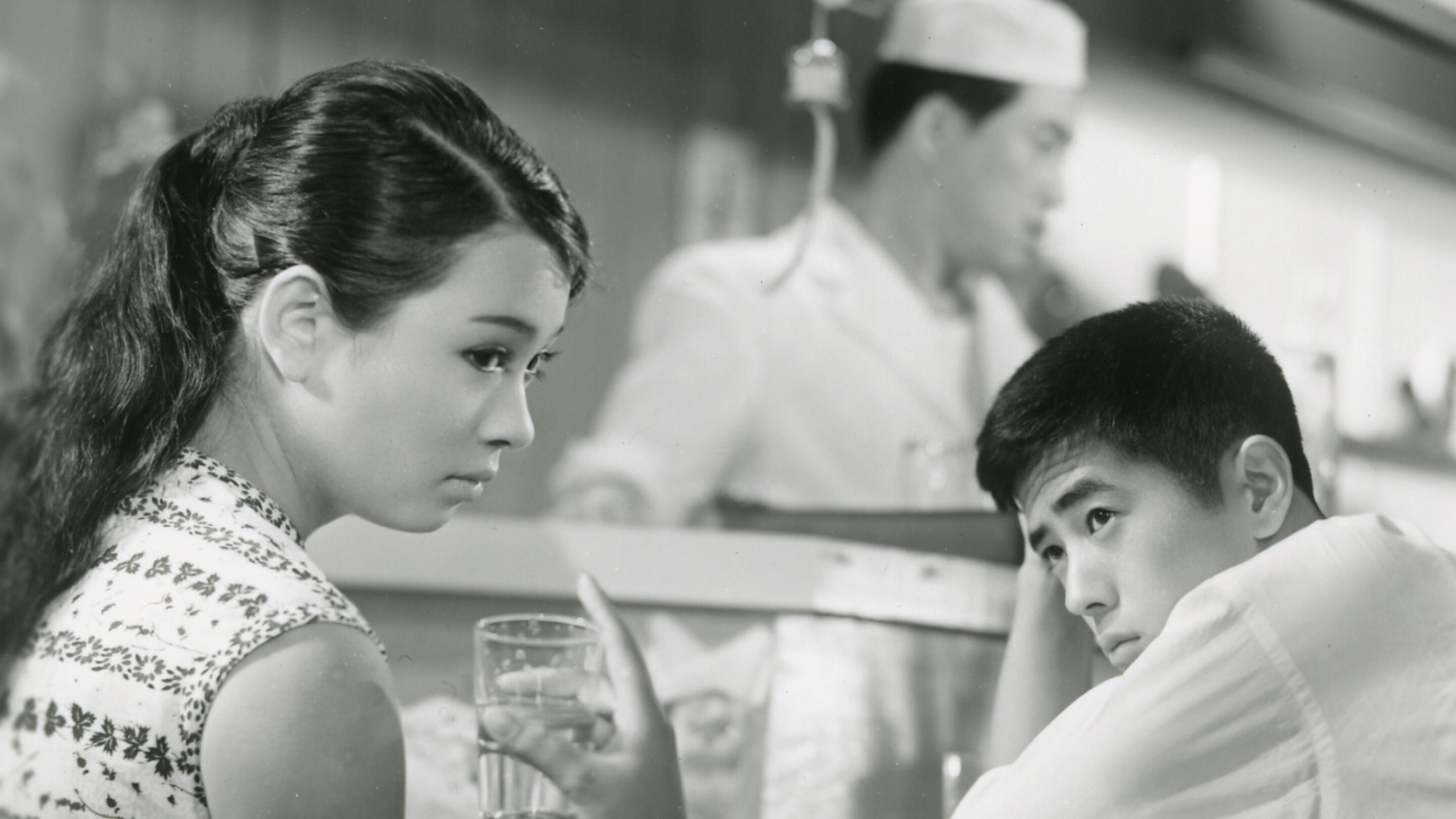
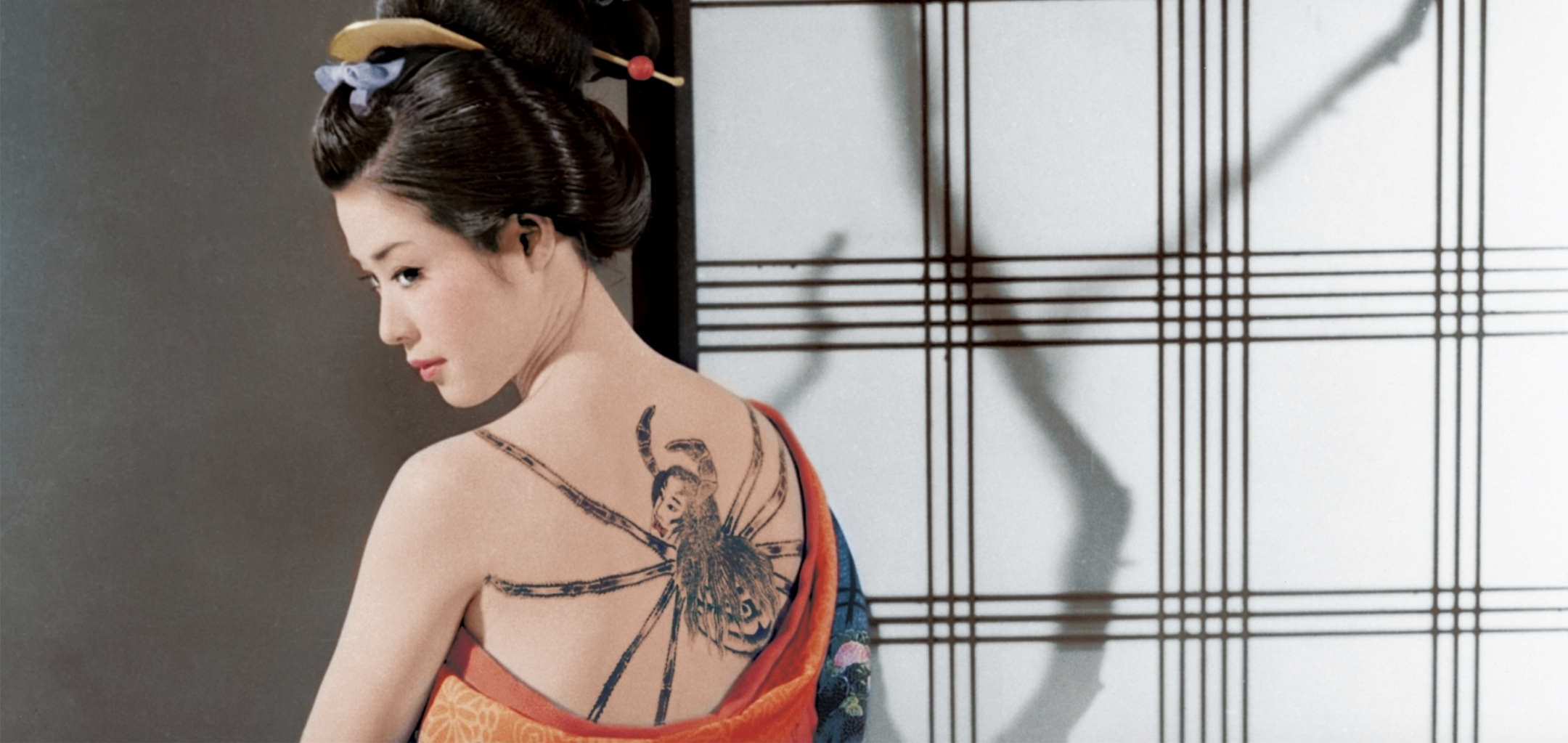
As I already mentioned, few of Masumura’s films are available with English subtitles, although thanks to boutique blu-ray distributors in the UK and America that is gradually changing. There are a few of his films that are personal favourites of mine. Black Test Car, released in 1962, is about two rival car manufacturers competing to secure the business of Japan’s brand new cashed-up middle classes. Giant and Toys, from 1958, is about a caramel company’s marketing executive finding a young woman to be the company’s new spokesperson, only to find she is a lot more manipulative and ambitious than she first appears. Irezumi, a period thriller made in 1966, follows an abused woman on a violent mission of revenge.
Later in his career, as Japanese cinema began to struggle against the popularity of television and glossy American imports, Masumura followed many of his contemporaries in shifting to making exploitation films – he directed one of Katsu Shintaro’s Hanzo the Razor movies – as well as erotic, so-called ‘pink’ films. He died in Tokyo in 1986, at the age of 62.
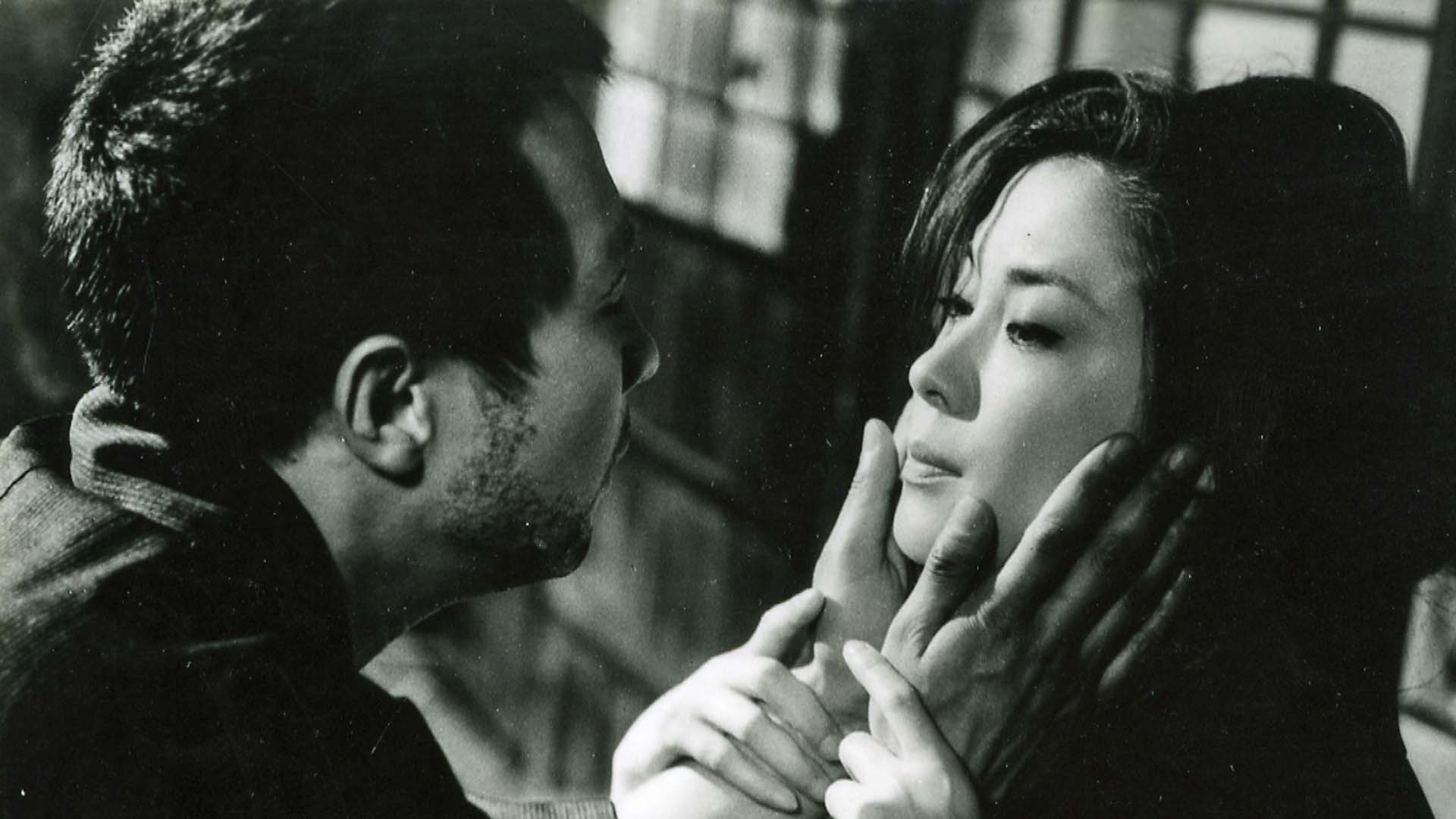
So to The Wife of Seisaku, today’s feature. I don’t have a great deal to tell you about it, because as I said; it’s hard to find Masumura’s films outside of Japan. I’ve actually never seen it. I’m as excited to check it out as you are, and see how the common tropes and concerns of Masumura’s body of work are reflected in it.
What I can tell you is that the film stars Wakao Ayako as Okane, who returns home after the death of her elderly husband. She soon catches the eye of Seisaku (Tamura Takahiro), a local upstanding citizen, and they marry. Their relationship, however, is soon threatened by war: in this specific case the Russo-Japanese War of 1904 to 1905.
Wakao Ayako was a major star of mid-century Japanese cinema. She featured in 20 of Masumura’s films, and seven of Ichikawa Kon’s, as well as films for Mizoguchi and Ozu. As a point of trivia, it turns out she’s still alive and turns 93 in November.
The screenplay to this film is by Shindo Kaneto, a director in his own right whom you might know from films like Onibaba, The Naked Island, and Kuroneko.
It may be worth just briefly explaining the Russo-Japanese War, in case it comes up in the film. It was the result of territorial disputes – not just those islands between eastern Russia and northern Japan, but also colonial occupations by both countries in Korea and what was then known as Manchuria in China. Russia had expanded into North Asia because it was afraid – as were a few European powers – of Japanese expansion across Asia and into Europe.
Now for centuries leading up to 1853, Japan had closed itself off to European powers and refused any significant contact. Over the previous 60 years this situation had changed, and under its Emperor Meiji Japan had aggressively opened itself up to trade, new technology, and the international community. While there had been a Sino-Japanese War in 1894, which Japan won, the Russo-Japanese War was in effect Japan’s first-ever modern conflict.
I hope you enjoy The Wife of Seisaku. I hope that this introduction might provide you with a little context and some food for thought while you watch it. I’ve chosen to finish this piece with a quote from Masumura himself, written for the film magazine Eiga Hyoron in 1984:
‘They say my work is arid and deprived of feelings. Moreover, it has been accused of emphasizing the funniness of the characters, of my being frivolous and displaying a poor sense of reality. The tempo is excessively fast, the description of the environment and the atmosphere is lacking: this is why my work may seem arid and detached. In one way, these critics are correct. However, if I am allowed to justify myself, I would just like to say that I intentionally reject sentiment, adulterate reality, and deny the atmosphere.’


Leave a comment