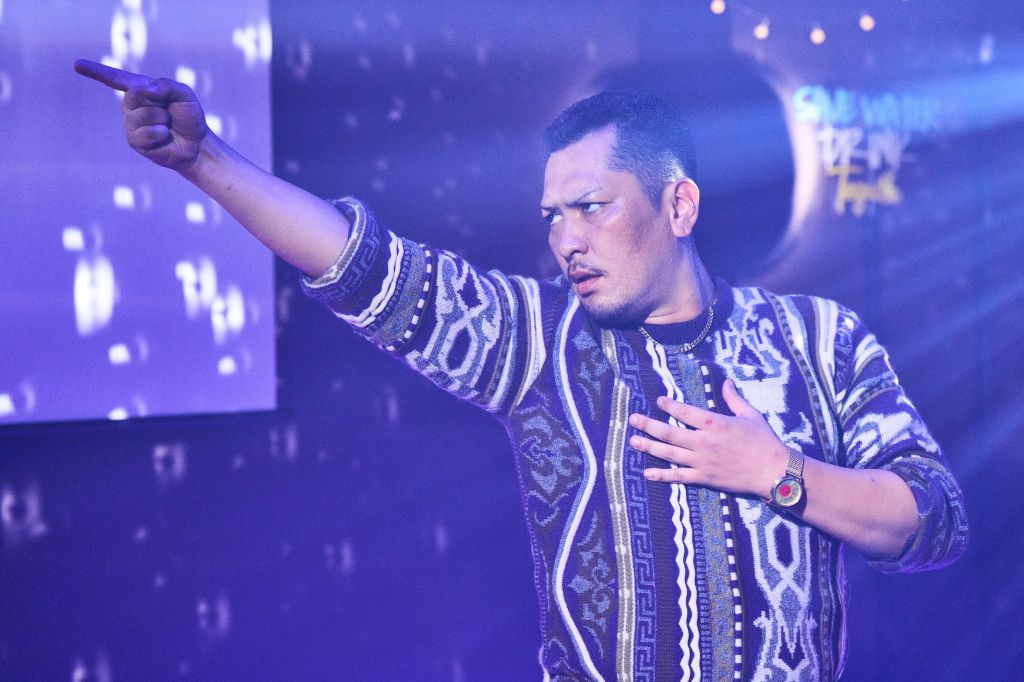
Yakuza enforcer Kunio (Fujii Akito) struggles to make a living. His Mikami clan is broke, competitor factions are moving in on his territory, and strict anti-yakuza laws are making it impossible to sustain his criminal lifestyle. One night an altercation with a rude civilian shifts towards violence. Unable to risk committing assault, Kunio does an intimidating dance instead. Someone films the exchange, and he unintentionally becomes Japan’s latest social media superstar.
Break Free is a ridiculously fun comedy about competitive dance, underworld crime, and the world’s current obsession with generating TikTok content. It comes from writer/director Nakamoto Yu, an up-and-coming filmmaker whose previous works include independent action flick Harawata Man (2019) and horror film The Slit-Mouthed Woman Rises (2023). There is a decent chance that Break Free, which made its North American premiere at the Fantasia Film Festival, is going to put him on the radar for international fans of Japanese cinema. This is exactly the sort of film for which festivals were invented: it is wonderfully original, culturally distinctive, and absurdly funny.
Much of the film’s success comes from its star, Fujii Akito, who presents a perfect image as an intimidating gang figure. He is a gifted comic presence too, and much of the best humour of the piece comes from his gradual shift from stoic heavy to enthused dancer. When his strapped-for-cash clan masters see a financial opportunity, Kunio is dispatched to take dance lessons and build his reputation online. When he becomes more invested in dance than crime – and develops romantic feelings for his teacher – it places his position in the clan at risk.
Fujii’s strong central performance benefits from strong support, both in his yakuza life and his dance experience. Ichinose Wataru is excellent as a former yakuza turned yakiniku chef. Fukagawa Mai is charming as dance teacher Marie. There is even a cameo by real-life dancer and actor Sano Reo thrown into the mix.
The dance and fight sequences are shot in highly similar ways to one another, with an active camera and well-coordinated stunt work. Nakamoto captures two worlds very effectively, albeit in both cases in an exaggerated and colourful fashion. His depiction of the yakuza, for example, is understandably based on the popular and outlandish image of the subculture rather than anything realistic. Kunio looks perfect with his gold chains and array of ugly sweaters. There is even a member of the group styled like noted crime film veteran Kitano Takeshi – if it’s not deliberate then its a remarkable coincidence.
What I am most reminded of in the end is actually Suo Masayuki’s 1996 comedy Shall We Dance. That celebrated smash hit saw a depressed businessman reinvigorate his life through ballroom dance, and a very similar process goes on in Break Free. Kunio is living a listless existence without joy, and it is dance that allows him to express himself emotionally and build a better life. Both films present an insight, however small, into the bottled-up, rules-based culture of Japanese society – as well as an avenue for individuals to escape its effects. It’s funny stuff, but weirdly inspiring as well.
Break Free made its North American premiere at the Fantasia Film Festival. Click here for more information.



Leave a Reply