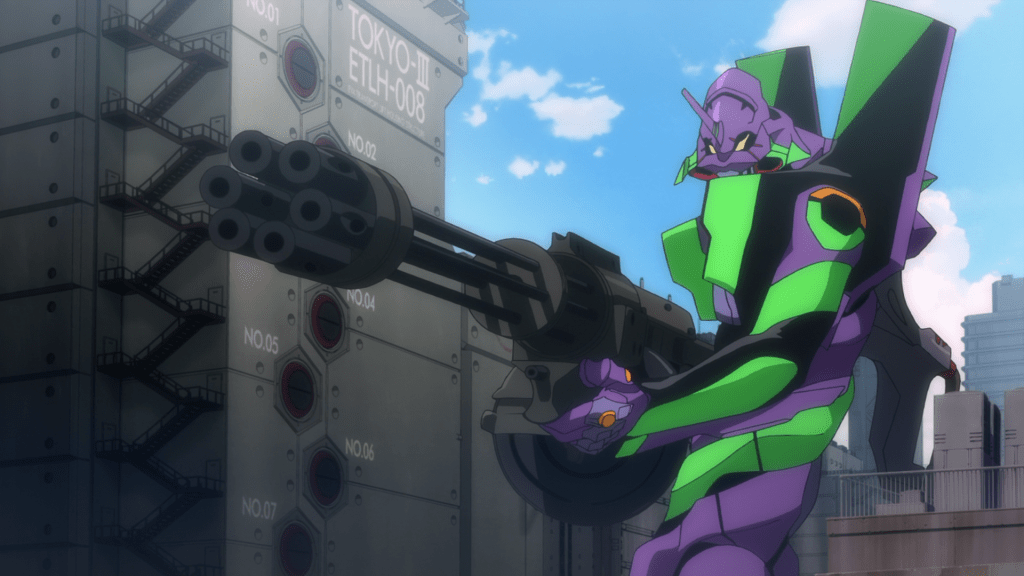
In the history of Japanese animation, or anime, there are a couple of key touch points represented by the most popular of films and television series. Mobile Suit Gundam. Astroboy. My Neighbor Totoro. Dragon Ball. Among those particularly popular artefacts, responsible for a staggering amount of home video sales, toys, and other merchandise, is 1995 series Neon Genesis Evangelion: a melodramatic mixture of giant robot action, genre deconstruction, and Shinto and Christian iconography created by animator and director Anno Hideaki.
Anno’s 2007 relaunch Evangelion: 1.0 You Are (Not) Alone is a difficult film to review, and a troublesome one to recommend. Originally intended to form the first of a four-part summarised remake of the 1995 television anime series, it instead opened a far more ambitious re-imagining of the entire story that took almost a decade and a half for the director to complete. Those later films are extremely interesting, and offer a radically changed experience compared to the original show. This first part, however, almost entirely plays out in summary mode: it is a re-animated collection of scenes and storylines from the TV series, truncated and re-arranged to be more difficult for an audience to appreciate and follow. On its own merits it is a deeply ordinary exercise in brand maintenance, but viewers wanting to see the vastly more accomplished sequels are stuck needing to watch it first.
It may actually be a more challenging watch for those who watched the original series, since it chops and changes the order of events and scenes. Some plot elements appear to have vanished completely, while others happen in different ways. It can rapidly get confusing to follow.
For new viewers it might be an easier watch, but it also exists in a substandard state compared to those first six or seven episodes. There is little room for character development and nuance. For the uninitiated it does not do the broader franchise any favours – I can imagine the viewer bouncing off the film and never sampling the series.
Plans to largely use 16mm footage of original TV animation quickly fell by the wayside, but the re-animated sequences wind up trapped between a slavish imitation and a more contemporary digital take. Is the animation better? Perhaps, but opportunities for innovation are not taken up as much as they could have been. Then again, the film has been re-released twice: the original home video release included new cuts and effects, under the numbering 1.01, and a later release added even more under the numbering 1.11. It is hell for completists – for the record this review was based on the 1.01 DVD.
As it stands, this does not feel like a film in its own right so much as unwanted homework for other, better films. That makes it difficult to recommend – would it be so bad to read the Wikipedia summary and just jump to the second film?





Leave a comment