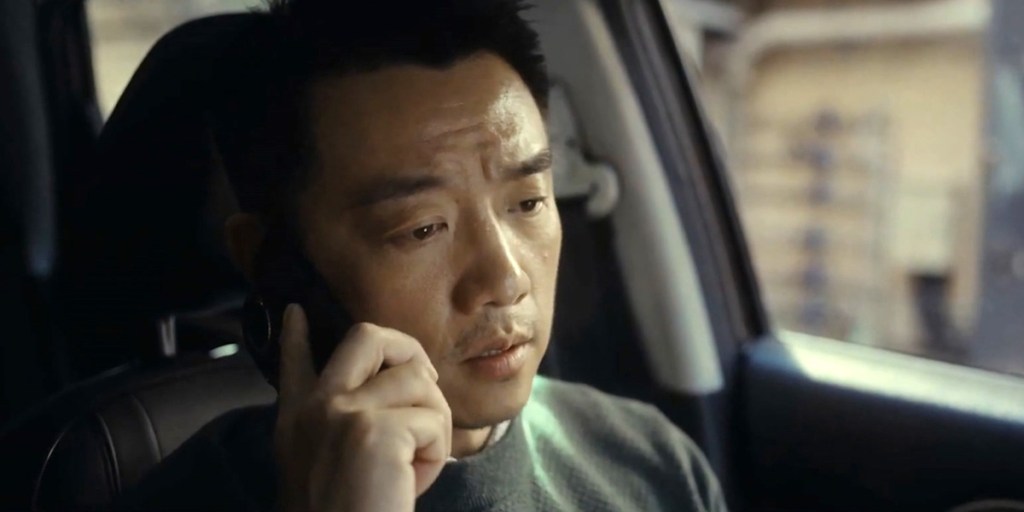
A young woman is sexually assaulted in her sleep. A compulsive gambler has an argument with his father, leading his father to suddenly die. A young boy vanishes into thin air, somewhere in an apartment stairwell between his front door and the street. Three seemingly unrelated events: the purpose of Vanishing Point is discovering how they unexpectedly intersect and come together.
Vanishing Point is a new Chinese thriller, set in and around a Chongqing apartment building. It is co-written and directed by Taiwanese filmmaker Cheng Wei-hao, whose Tagalong films were a big local hit and whose 2022 film Marry My Dead Body was Taiwan’s entry to the International Feature Academy Award. He now brings his considerable talents to bear on a mainland feature. It is an intricate and gleefully convoluted piece of work, at times less a film and more a labyrinth. One could criticise it for having too many twists, but in Vanishing Point the twists are largely the point. Complaining about it seems rather like paying for an all-you-can-eat ice cream buffet before claiming you’re lactose intolerant.
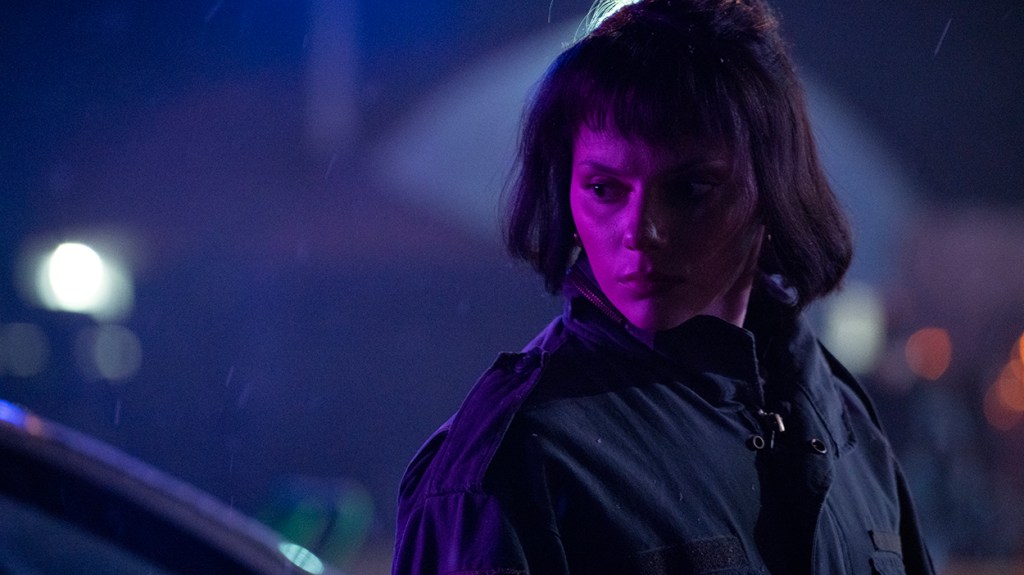
The film is cleverly situated in the Chinese mega-city of Chongqing. Home to more than 30 million people, it is a labyrinthine maze of elevated walkways, roads, and highways. As shot by Meteor Cheung, it most often resembles some sort of film noir hellscape. As the story elements twist and wrap around each other, so the film visually reflects that motion. The claustrophobic tone is accentuated by plenty of handheld camera work, offering plenty of subjective viewpoints and a very stressed, personal edge.
It also soon becomes clear that Vanishing Point employs a non-linear narrative. It jumps back and forth in time at a dizzying rate – almost too much to remain coherent at times – but careful editing and plot structuring ensure that it stays on track. The film plays a strategic game of withholding information until it is most relevant, and seeding small clues and foreshadowing as it goes for maximum impact later on. There is a remarkably Korean style to this; I would be surprised if Bong Joon-ho’s acclaimed Parasite (2019) was not an influence, at least on functional terms.
A solid ensemble cast keeps things heightened and quite melodramatic. Roy Chiu is desperation personified as the foolish and compulsive gambler Yan Wu, whose every choice pushes his situation further into peril. Qi Zhang makes a strong impact as Yan’s father, despite a brief screen time. Ryan Zheng gives the film a steady emotional core as Tang Yu, whose son Nuo has gone missing.
Particularly impressive is Feng Xue Ya as Yingying, the Tang family’s young neighbour. While sympathetic, she is also clearly marked out early on as knowing more about Nuo’s disappearance than she is letting on. It is an excellent, emotive performance.
There are some drawbacks – Chinese law dictates how the police are represented on screen, which rather blunts any chance of depth in relevant characters – but overall Vanishing Point represents a gleeful, remarkably dark array of narrative surprises. For some viewers it may all be too much: over-egged and stretched beyond credulity. For me, it is all part of the entertainment.
Vanishing Point is currently screening in cinemas in China, Australia, New Zealand, and the USA. Check your local theatres for session times.




Leave a Reply