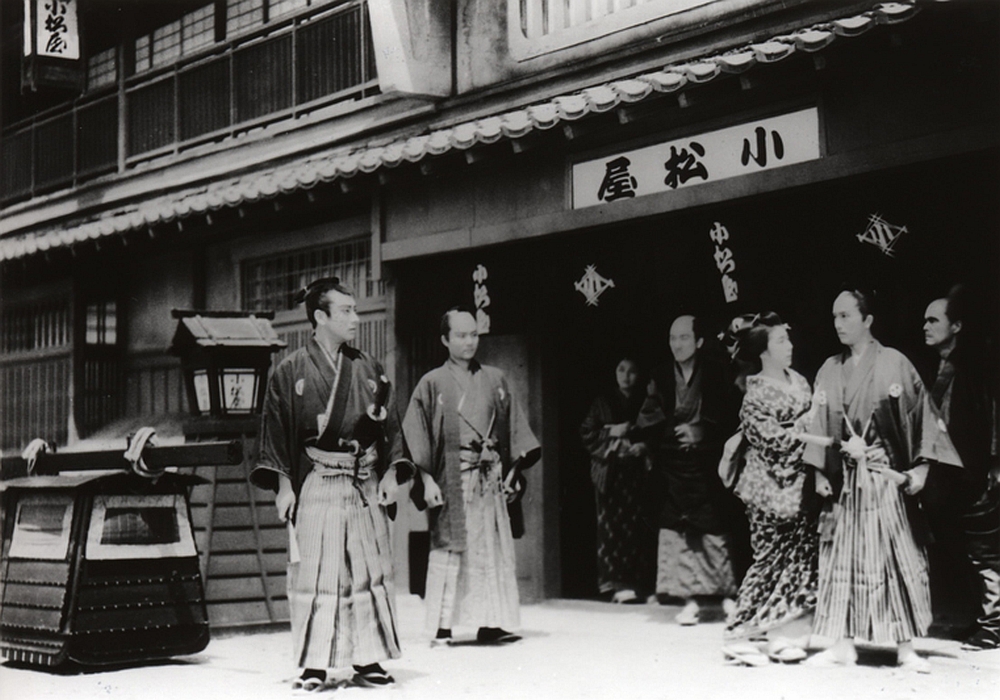
Any discussion of Japan’s finest film directors must surely include Naruse Mikio. Naruse started his career as what one might call a director’s director – loved by his fellow artists, but not so much by film producers. Shiro Kido, chairman of foundational studio Shochiku, was not enamoured with his style or tone and referred derisively to Naruse’s ‘monotone pace’ and ‘absence of highs and lows’.[1] Other directors, notably Ozu Yasujiro, recognised a genuine talent behind Naruse’s early works. Ozu personally cited Pure Love (1930), Naruse’s second film, as having particularly strong dramatic potential.
Naruse would ultimately direct 89 films, and establish himself – alongside Ozu, Mizoguchi, and Kurosawa – as one the four great directors of mid-20th century Japanese cinema.
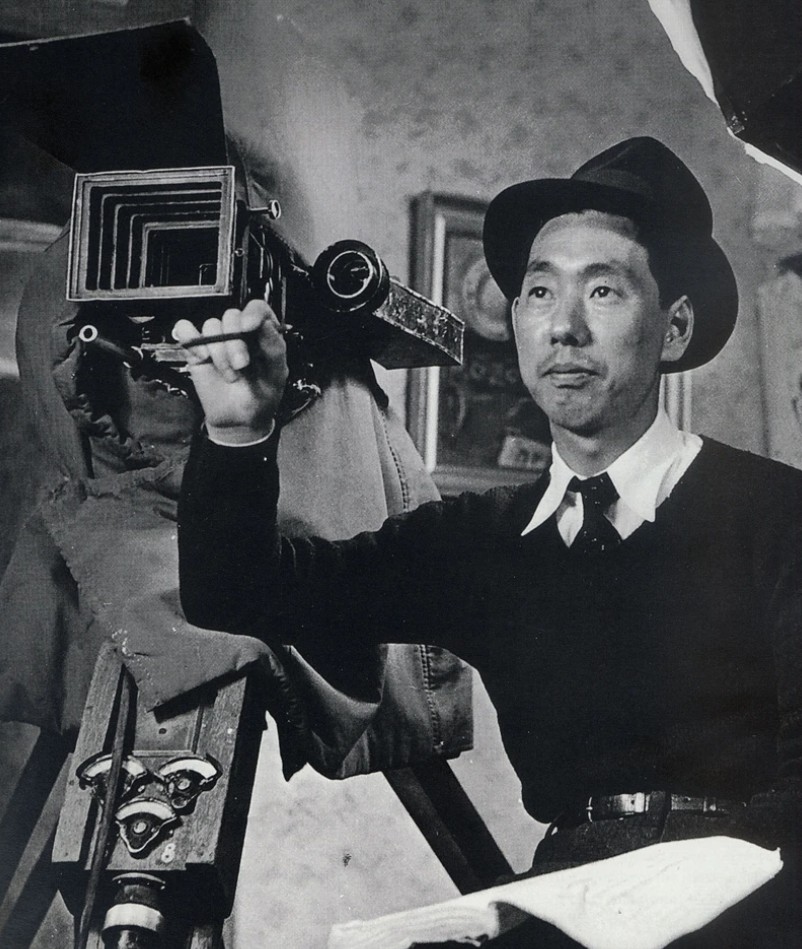
Naruse was born in Tokyo in 1905. His parents died when he was young, leaving him to be raised by his elder siblings. In the 1920s he worked for Shochiku as a lighting assistant, before making his directing debut with the comedy Mr and Mrs Swordplay in 1930. His initial films – mostly lost – were comedies, but it was a run of domestic female-oriented dramas in the early 1930s that both made his reputation and left Shiro Kido so unimpressed. Apart from You (1933), Every-Night Dreams (1933), and Street Without End (1934) all presented women facing immense challenges in Japanese society. His films became known for their pessimism, and their generally bleak tone. He was a poor fit for Shochiku’s purposes, and in 1935 he left the studio for competitor PCL.
For PCL he directed his first major commercial hit, Wife! Be Like a Rose, which became the first Japanese feature to screen in the USA. For there his career went through a somewhat fallow period, creatively speaking. By 1938 Naruse had shifted to working for up-and-coming studio Toho, which had been founded in 1932, on whatever projects to which he was assigned. It was only with Repast in 1951 that Naruse was seen to enjoy a career resurgence, and he followed its release with his most famous and reputable films including Late Chrysanthemums (1954), Floating Clouds (1955), and When a Woman Ascends the Stairs (1960).
Almost Naruse’s entire career was dominated by films about women in contemporary settings. This is regularly commented upon by film critics and historians as if he had a deep personal desire to tell such stories – and he well may have had. Even so, Fujii Hitoshi (author of From Home to Resistance: Mikio Naruse’s Women’s Films) noted: ‘He remained a studio director throughout his life. Therefore, the reason he made films about women was ultimately in response to the studio’s request, and it was only because it brought profits to the studio.’[2]
Naruse only made a samurai film twice: Okuni and Gohei in 1952, and before that A Tale of Archery at the Sanjusangen-do – released in June 1945.
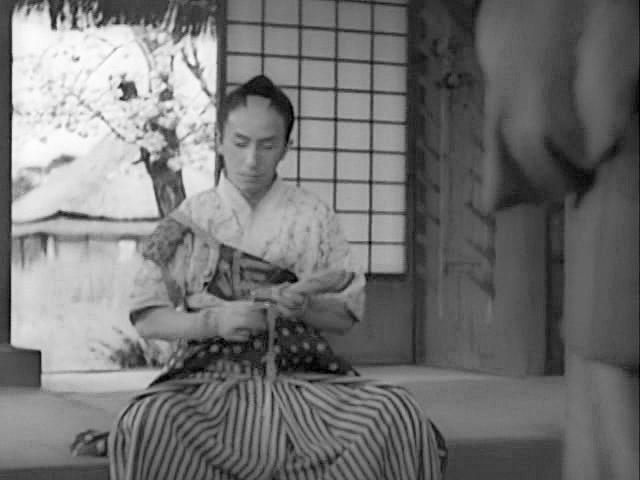
Filmmaking in Japan during the Pacific War was marked by military censorship and frugal budget-cutting. With the entire country experiencing food rationing so severe it caused mass malnutrition, spending valuable resources on films might have seemed a risible indulgence. Instead cinema was seen as a valuable tool for propaganda. A desire by military censors for patriotic themes led to a surge in period dramas, particularly jidai-geki films that could emphasise the importance of honour and duty.
It was in this context that Naruse temporarily abandoned his usual domestic fare in favour of a samurai film.
During the relative peace of Japan’s Edo period, martial skills among samurai gradually became less important. Archery essentially transitioned into something of a sport, and one of the most famous contests was held at the Sunjusangen-do temple in Kyoto’s Higashiyama district. The Toshiya consisted of a range of archery challenges, one of which required contestants to try and hit a target as many times as possible in a 12-hour period. The all-time winner of this contest was Wasa Daihachiro who in April 1686 shot 13,053 arrows, of which a record-breaking 8,133 hit their mark. It is this achievement that forms the basis of Naruse’s film. The bow used in the Toshiya was known as a yumi; running more than two metres in height, it was grasped by the lower third by the contestant when firing.
The focus on Daihachiro’s achievement at Sanjusangen-do would have appealed to Japan’s military command, who favoured patriotic and stirring stories for the cinema. The themes of honour, perseverance, and talent were exactly the values needed to encourage a nation at war.
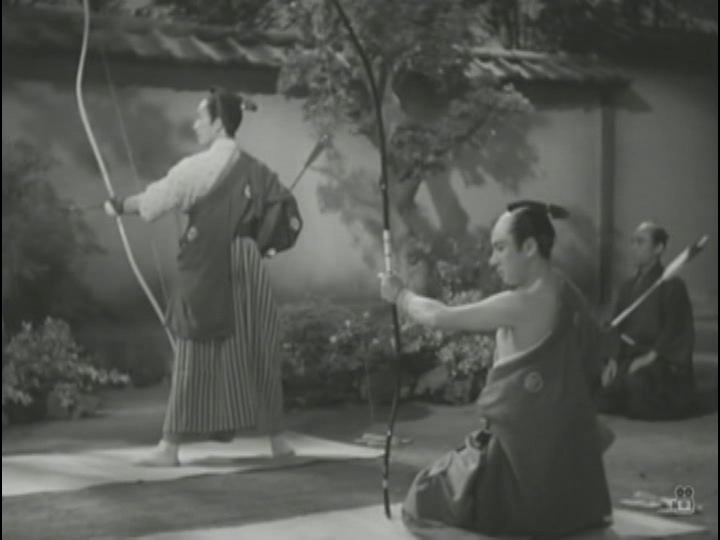
In Naruse’s film Daihachiro is a moody 17-year-old. He has pledged to break his own father’s record in competition and hit the temple target 8,000 times. His father was defeated five years ago in the same contest and, unable to hide his shame, ultimately committed suicide over it. The pressure on Daihachiro, therefore, is extreme.
Since his father’s death Daihachiro has lived with the supportive Okinu (Tanaka Kinuyo), who manages a local tavern. His preparations are transformed by the arrival of the samurai Karatsu Kanbei (Hasegawa Kazuo), who chooses to take Daihachiro under his wing: acting as part coach, part bodyguard in the lead-up to the contest.
Daihachiro is supposed to be a teenager, but in the role Naruse cast 27-year-old Ichikawa Sensho. He is visibly too old for the role, and thus makes the character’s adolescent petulance seem particularly childish. It is not a unique problem among Naruse’s films; his 1933 drama Apart From You featured 23-year-old Isono Akio as a teenage character.
Ichikawa Sensho’s real name was Osanai Takeshi, and he was the son of director Osanai Kaoru. Ichikawa had started acting in the theatre – notably in the same Zenshin-za theatre company that had collaborated with Yamanaka Sadao. Indeed, a young Ichikawa performed in three of Yamanaka’s films including Humanity and Paper Balloons. In 1941 and 1942 he appeared in the cast of Mizoguchi Kenji’s two-part The 47 Ronin. In April 1948 Ichikawa died from an undisclosed illness at the age of 29. A Tale of Archery would be his final film.
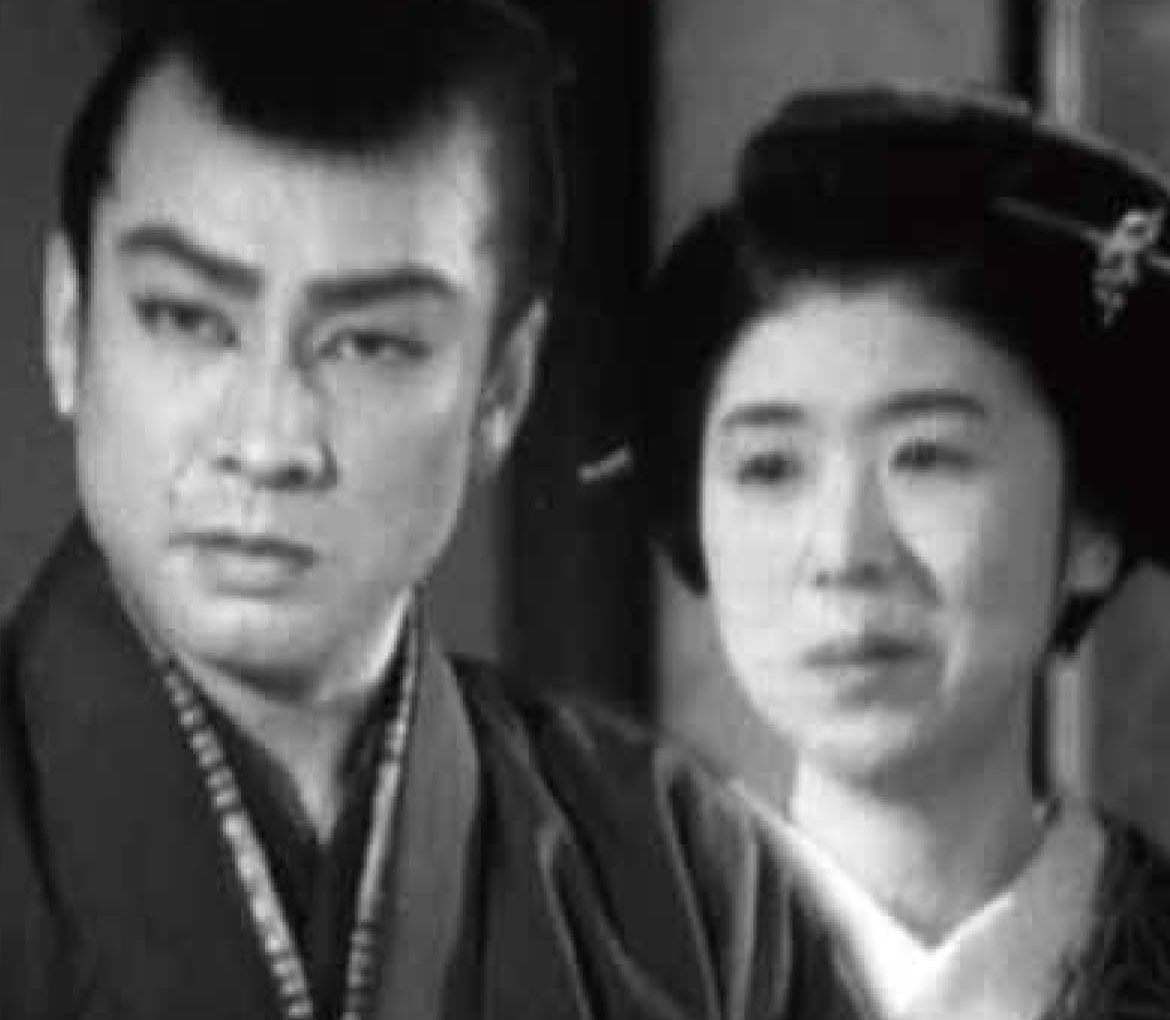
Hasegawa Kazuo was, at the time, a well-known star of film and theatre. He had started his screen career working for Shochiku before shifting to Toho in 1937. His choice coincided with an unmotivated slashing attack that scarred his cheek, and which was forever rumoured – accurately or otherwise – to be the work of a resentful Shochiku executive. Notable earlier roles by Hasegawa were in Kinugasa Teinosuke’s Crossroads (1928) and Chusingara (1932), as well as Naruse Mikio’s own Tsuruhachi and Tsurujiro (1938).
In 1944 Hasegawa was drafted into the Imperial Japanese Army’s Tottori Regiment but was discharged within a year. A Tale of Archery marked his return to the screen.
Tanaka Kinuyo had been an actor since the mid-1920s, and later in life would be renowned as Japan’s first major female film director. At the time of making A Tale of Archery, her directing career was still eight years away, and she was instead known as a prominent and popular supporting player. In 1931 she performed in Gosho Heinosuke’s Madame and Wife, which was Japan’s first talking picture. Other key features were Ikeda Yoshinobu’s The Pearl Lady (1927), Gosho’s Burden of Life (1935), Shimizu Hiroshi’s Ornamental Hairpin (1941), Kinoshita Keisuke’s Army (1944), and a string of films for director Ozu Yasujiro including I Graduated, but… (1929), Woman of Tokyo, and Dragnet Girl (both 1933).
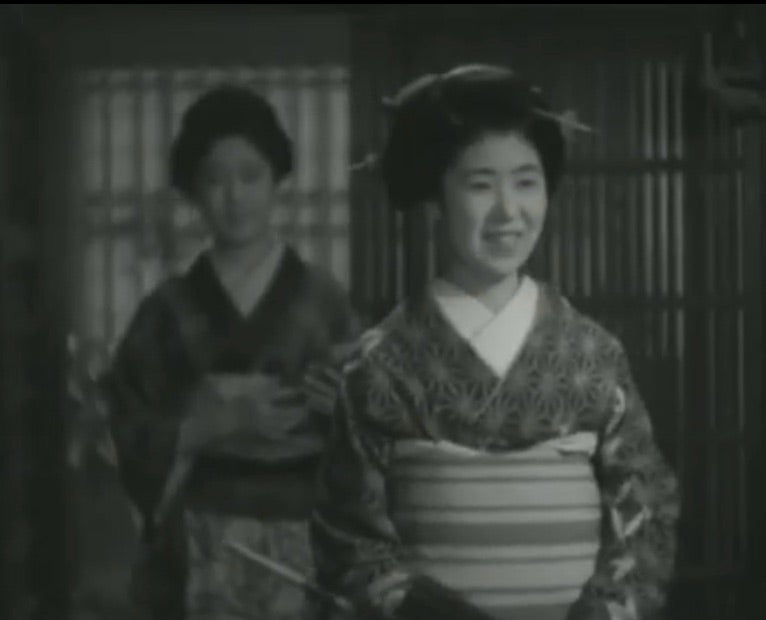
Filming took place between January and May 1945. American air raids periodically interrupted the shoot, which despite the film being a Toho production took place at Shochiku’s Shimogamo studio complex in Kyoto. The co-operation with Shochiku also enabled Toho to access some of its contracted players; not just Tanaka Kinuyo but also Katsuragi Fumiko as Kanbei’s mother.
A location shoot was also undertaken at the actual Sanjusangen-do, taking advantage of its relative proximity to the studio. The shoot lends the picture a valuable air of authenticity: it looks realistic because it is using the actual buildings where the real Daihachiro won his championship. It was also considered deeply uplifting by Tokyo audiences, whose city had in March 1944 been firebombed almost to oblivion. ‘We the survivors,’ wrote one critic, ‘live amid the gnarled ruins of a blasted landscape. With what longing do our eyes behold the sublime beauty of that temple! Beyond that, we desire nothing more. Nothing.’[3]
The film begins with a guide escorting a group of tourists around Sanjusangen-do. At first it almost seems like a modern-day scene; as if the people milling around the temple were from 1945, and the Pacific War or the American bombing runs were not of concern. It is only when glancing at the characters’ traditional garb and hair styles that it becomes apparent that the tourists are from the Tokugawa period and the film is set in the past.
It is not the only time Naruse uses this technique: during the film’s climactic archery contest the common folk spectate and gossip like a modern day audience at a tennis match or football game. For a director that spent so much of his career on contemporary drama, it is striking that when he does adapt a historical story he partly focuses on making the people seem as contemporary and modern as he can. A Tale of Archery may be set in the feudal 1700s, but as far as Naruse is concerned people did not change all that much.
It is the tour guide that notes Daihachiro’s father, and this allows the film to shift to Okinu’s tavern, and Daihachiro himself.
It is interesting to note the differences between how Naruse directs a scene compared to his contemporaries like Ozu. In an Ozu film, scenes are often deliberately static: characters will sit down and talk, often in a series of 180 degree shots and counter shots. In a Naruse the characters move. They enter, and sit, then stand, and then sit someplace else. They will turn their backs on other characters to say important things, in a manner later adopted by all manner of television soap operas. There is a constant sense of movement in Naruse’s films, which is about as unrealistic as Ozu’s static conversations but which achieves a similarly arresting effect.
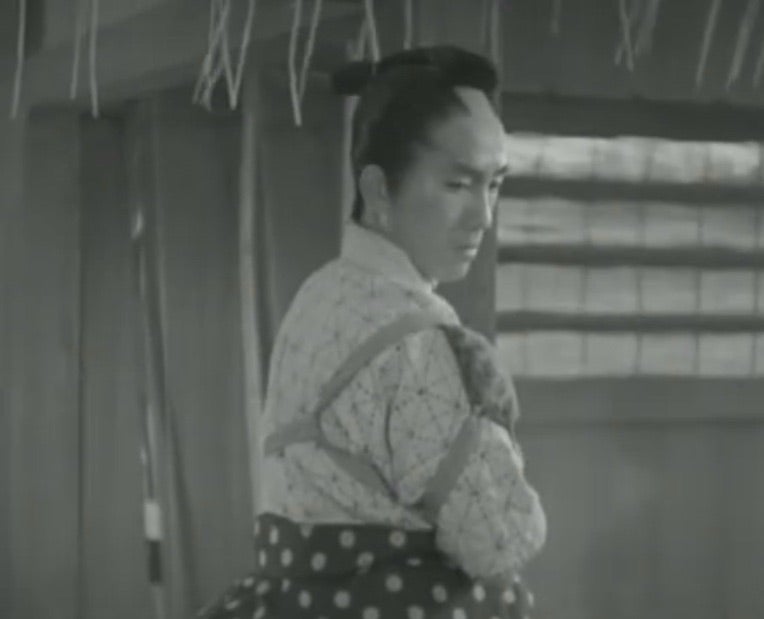
Over the course of his career Naruse earned a reputation for being a ‘quiet’ director, not often giving his actors extensive instructions on how to deliver their lines. Where they placed themselves physically seemed more significant to him than what they said. According to film scholar Hirano Tetsuya: ‘Reading interviews with many actors who appeared in Naruse’s films, the key words he often said to them can be summed up as two: “Don’t overact” and “Be natural”.’[4]
The filmmaker Nishiyama Yoichi (Gurozuka, 2005) once commented on Naruse’s directing style thus: ‘So what did Naruse do? At a certain shooting location, he would decide which of the characters would be positioned there, and then the distance between that position and the position of another character. Next, he would decide the orientation of each character’s body – whether they should face forward, sideways, or alternate sides. Furthermore, in the flow of the play, he would decide which character would stand up and move in which direction for which line, and which direction the next character would move and face when they spoke their next line. I think he decided all of these things one by one.’[5]
‘He was strict on set, recalled actor Kagawa Kyoko – who performed for Naruse in Mother and Lightning (both 1952), ‘but he never yelled things like, “That’s no good!”’[6]
Hasegawa Kazuo gives a broad, infectious performance as Kanbei. A key early scene has him running rings around a befuddled group of hired thugs without even needing to draw his sword. His encouragement and nurturing of Daihachiro has a nice air of authenticity, balanced somewhere between being a surrogate father and a supportive older sibling. Kinuyo Tanaka plays Okinu with grace and intelligence: unsurprising given Mikio Naruse’s usual strong focus on female characters.
One of the most carefully observed elements of Naruse’s film is the unrequited love between Okinu and Kanbei. It is gently expressed, and goes stoically unresolved at film’s end, but it seems a more complex and humanistic part than any other.
Revelations at the film’s midpoint irrevocably change the characters’ relationship. The second half is a far more dramatic affair than the first, leading to the archery tournament during the climax. The narrative is resolved in the end, but it honestly feels that a lot of emotional beats and conclusions have – like Okinu and Kanbei’s romance – been left off-screen. Naruse seems content with ending on ellipsis.
Naruse’s completed film ran only 76 minutes; war-time shortages had a tendency to limit film lengths. When A Tale of Archery was released on 28 June 1945, Japan’s surrender to the United States was just seven weeks away.
[1] Audie Bock, Japanese Film Directors. Kodansha International, New York, 1978.
[2] Quoted in notes from Fukuoka Asian Film Festival (https://www.ship-s.jp/faff/column/narusemikio/05.pdf)
[3] Asahi Shinbun, 5 July 1945. Quoted in High, Peter B. The Imperial Screen, University of Wisconsin Press, Madison, 2003.
[4] Hirano Tetsuya, “Four Perspectives for Enjoying the Films of Mikio Naruse”, Komoreba, March 2024.
[5] Nishiyama Yoichi, “Special Feature: Kenji Mizoguchi and Mikio Naruse”, Athénée Français Cultural Centre, 7 February 2008.
[6] Kawamoto Saburo, “Kyoko Kagawa x Saburo Kawamoto”, Book Bang, January 2015.
 FictionMachine.
Leave a comment