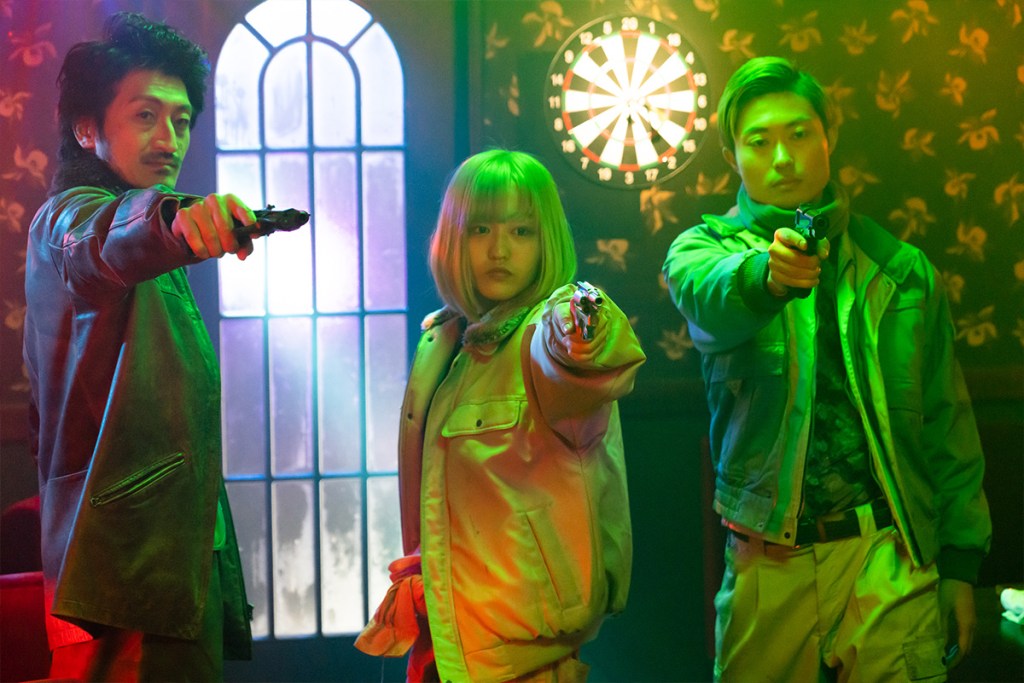
Shiraishi Koji’s deliberately rough and sleazy exploitation flick A Beast in Love (2020) is a classic case of pushing its objectionable content just a little too far in the wrong direction. The in-your-face bullying, assault, and murder portrays an harsh and confronting world where life has little meaning and violence seems the only way people communicate. The prominent featuring of a sex-crazed cross-dressing serial killer, however, punctures the entire enterprise. It turns a passable film into an actively ugly one.
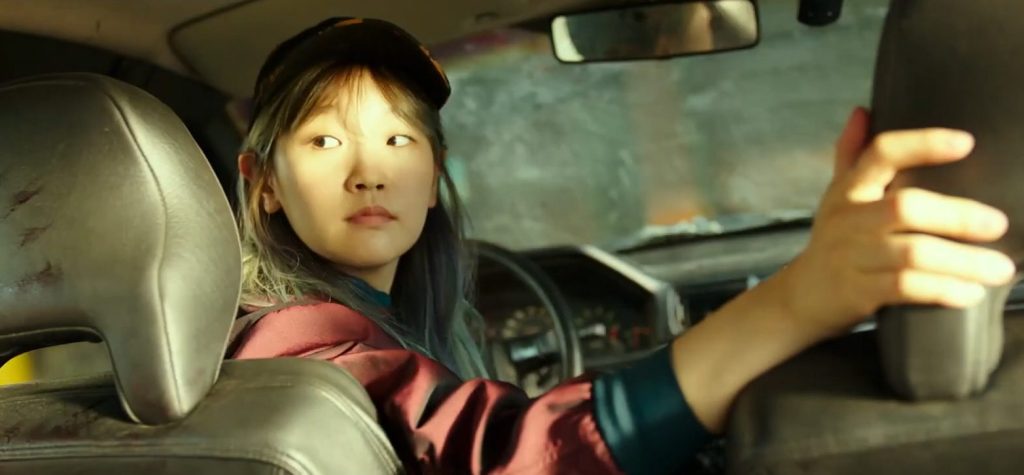
Chuya (Tanaka Shunsuke) is the bullied and timid latest member of a criminal gang. When he tries to run away with fellow gang member Shiori (Ueno Shiori), he instead encounters a deranged killer as well as his gang leaders (Kimura Tomoki and Hosokawa Yoshitaka) – none of whom are going to let him escape freely. It is enough to unleash the beast inside, and Chuya is soon revealed to be the most dangerous one of all.
Let us for the moment ignore the rampant transphobia that runs through A Beast in Love. Even excluding the film’s most odious elements, it still lacks in originality and echoes all manner of other, more accomplished Japanese cult films. It is a busy mini-industry of modestly budgeted, independent fare, and as such it takes some innovation and creativity for an individual work to stand out from the crowd. The narrative here is limited and predictable, with a small cast of characters left to meander through a remarkably empty small town setting. Shiraishi is generally known as a horror director thanks to films such as Noroi: The Curse (2005) and Sadako vs Kayako (2016), and based on his rather ordinary work here he would be better sticking to that particular lane in future. Any viewer seeking independent representations of violent culture and anti-social excess would be better off watching most other Japanese crime films they can find. (Personally I recommend Mariko Tetsuya’s Destruction Babies, which largely passed under the radar back in 2016.)
A Beast in Love is thus already a fairly missable and ordinary experience. Adding in the cross-dressing rapist and murderer just makes the film untenable. It is a case of ‘punching down’, misrepresenting an increasingly marginalised group of people and playing into the worst kinds of negative lies about them. Shiraishi is clearly attempting to shock his audience, and one could argue that he is therefore successful in doing that, but it makes the film puerile at best and more likely actively toxic.
Critically it is not the character that seems so odious, but the film’s treatment and positioning of them. It plays heavily into the idea of the trans community consisting of perverted freaks, and freely conflates all manner of identities and behaviours into one unjustified, amorphous mass.
There is plenty of scope for films to be challenging, or transgressive, or even actively objectionable, but the more extreme its position the more responsibility there is for the filmmaker to be careful. It is ironic that Shiraishi makes bullies his villains, and then uses his film to demonise vulnerable and marginal people.
And it is not even that good a movie anyway.
 FictionMachine.
Leave a comment