First broadcast 27 April 2025.
If the previous episode of The Last of Us, “Through the Valley”, was a sudden and violent eruption of violence and horror, then “The Path” is a drawn-out, mournful hour of consequences and sorrow. It is, in effect, an episode the series needs to have. It is an episode that the audience desperately needs to have. If you read this review without having seen at least the previous episode, any unwanted plot revelations are on you.
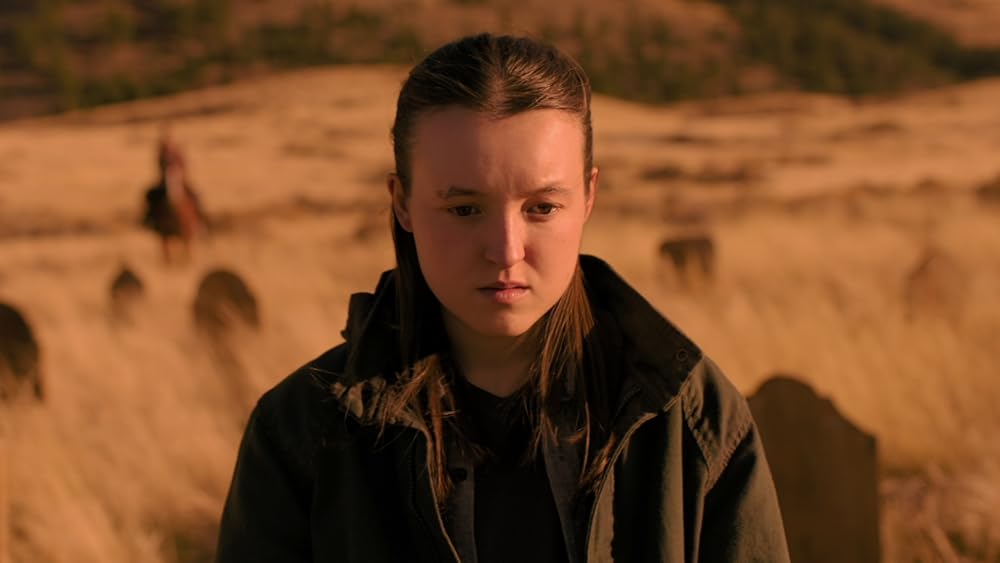
In the aftermath of the infected attack on Jackson, Wyoming, Ellie (Bella Ramsey) begins her slow recovery – both physical and emotional. She wants to lead a revenge posse to Seattle to find and kill the mysterious Abby, but the community may have other ideas.
This is an episode that starts with trauma, which is viscerally presented with a tremendous sense of upset. It ends with, in effect, a sort of funeral for Joel (Pedro Pascal). In between there is a lot of work on the series’ various characters, and how they grieve, and how they choose to recover from the devastating events of the previous episode. It is a strong showcase for Bella Ramsey, as well as Isabela Merced as friend and burgeoning love interest Dina. There is an extent to which the episode’s events are a foregone conclusion, but they are played out with patience and artfulness by writer Craig Mazin and well directed by Peter Hoar.
The episode also marks a significant shift in the style and tone of The Last of Us. In its first season, the journey was largely the purpose: Joel and Ellie’s trek across a devastated North America took most of the year to play out. Here, a revenge-motivated Ellie and Dina make the 900-mile journey to Seattle seemingly in the space of minutes. It seems the travel is less important this season than what it is the two will find there. This represents a rather bold storytelling choice, and while it is obviously inspired by the pre-existing videogame that it is adapting it still feels like a palpable creative risk.
Episodes like these are difficult, since they exist to smoothly but rapidly shift the status quo from one act of the story to another. “The Path” is an excellent example of the form, boasting strong acting, good character development, and some nice visual imagery. Only the sudden transition to Seattle feels a little off-key, seeming rushed in the context of a series that usually has more patience. One has to trust that the remaining four episodes of the season remember to slow down.

 FictionMachine.
Leave a comment