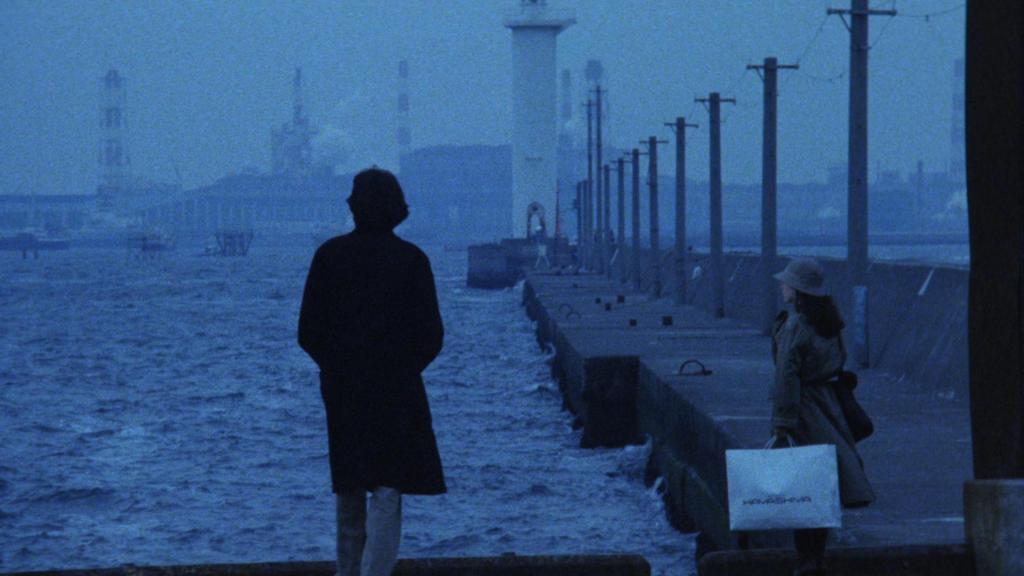
A shambolic private detective descends into the criminal underworld when he finds himself blamed for his best friend’s death. One could be forgiven for thinking they were watching Robert Altman’s 1973 thriller The Long Goodbye, which was based on the Raymond Chandler novel of the same name. Instead it is Kudo Eiichi’s 1981 Japanese noir Yokohama BJ Blues, a loose unofficial remake that liberally soaks Altman’s version in a greasy patina of Yakuza criminal sleaze. The similarities are clear, but Kudo’s stylish riff on the material is more than distinctive enough to stand on its own.
Kudo’s career as a director started making jidai-geki samurai films including 13 Assassins (1963) and Eleven Samurai (1967). By the beginning of the 1980s, and with Japanese commercial cinema deep in a decade-old slump, he had shifted firmly into what were considered B-grade crime movies. Gifted with a strong personal style, Kudo by all accounts was directing films well above the quality that was expected. Thanks to boutique bluray distributor Radiance, English-speaking audiences have the chance to find out for themselves with this handsomely packaged, neatly restored subtitled release. It is well worth tracking down: 1980s live-action cinema from Japan never really got much exposure internationally, and releases like this are filling in the gaps in a lot of enthusiasts’ understanding of the period.
Matsuda Yusaka cuts a wonderfully ragged figure as BJ, a blues singer turned private eye. He is not particularly good at either job. He has a low-key laconic attitude that dictates the tone of the entire film: it is beautifully atmospheric, with a film grain slapped on like an oil impasto and a wonderful use of colour. It evocatively reflects the seedy underbelly of Yokohama and its varied collection of criminal antagonists. There is a striking sense of style throughout, particularly via its oppressively framed close-ups and selective use of long takes. The steely blues throughout the film prefigure a lot of American genre works by James Cameron and Kathryn Bigelow.
It is this atmosphere that dominates the film, rather than the plot. For what is essentially a murder mystery there is a remarkable lack of urgency about BJ’s investigation. Kudo maintains a strangely relaxed, almost disinterested tone about the narrative – and it is strangely addictive. BJ comes across as someone that has simply given up – on life, on human nature, on his career prospects – and the same sort of weary resolve surrounds him from beginning to end. A homo-erotic seam runs throughout the film, in ways that feel both tender and exploitative in turn. Tanaka Koji is eye-catching as Akira, a young man whose mother has paid BJ to retrieve from a life in a criminal gang, and when the film ends it is a lot of his scenes that linger in the mind.
In this modern era of boutique distribution, it is a genuine pleasure to discover these sorts of obscure, previously unknown features and expand one’s understanding of cinema from around the world. Yokohama BJ Blues is a deeply original and surprisingly effective neo-noir: seemingly unique in tone, attractive to watch, and fascinating to watch unfold.

 FictionMachine.
Leave a comment