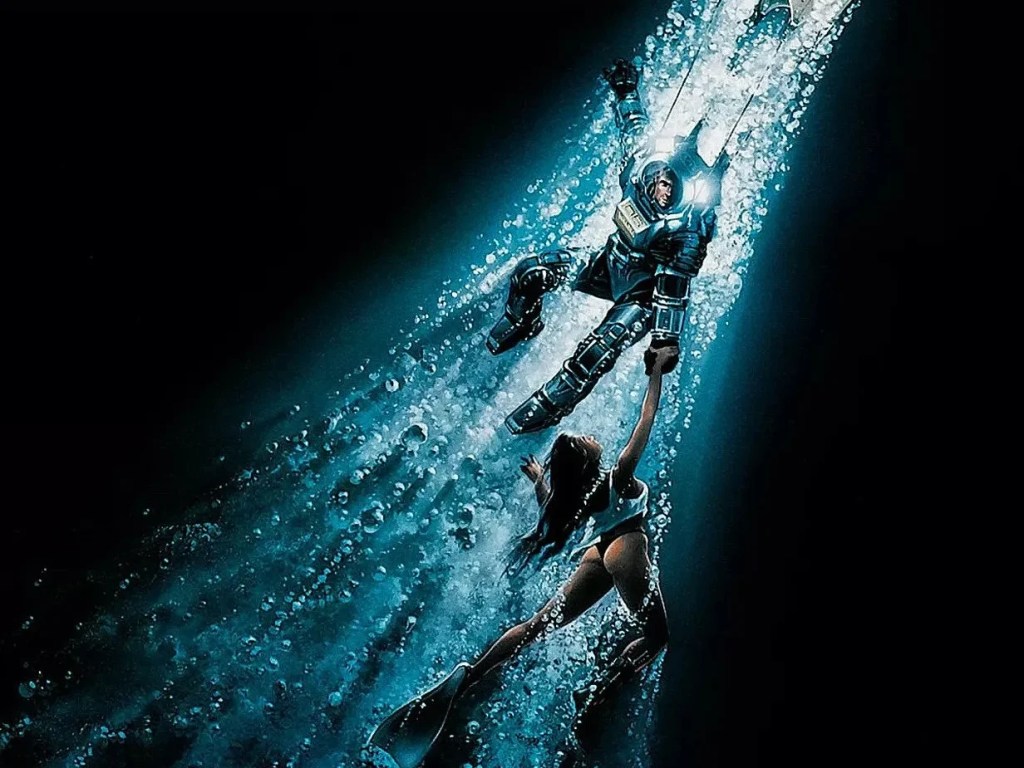
1989 saw a strange phenomenon where multiple undersea science fiction and horror films were released in the USA in the same broad window. Six films in total: James Cameron’s widely anticipated feature The Abyss was far and away the highest-profile of the set. Some time ago this website underwent a ‘deep dive‘ (pun intended) into the making and quality of this film. It does not present the entire picture, because any discussion of The Abyss inevitably leads to discussion of the other five.
Rushed to release on 13 January was Sean S. Cunningham’s Deepstar Six, a Carolco production distributed by Tri-Star Pictures. MGM’s Leviathan, directed by George P. Cosmatos, opened on 17 March. MGM also distributed Lords of the Deep, a Roger Corman production directed by Mary Ann Fisher, from 21 April. Wayne Crawford’s The Evil Below was released directly to home video in July. Finally, Juan Piquer Simón’s The Rift, released in some markets as Endless Descent, was delayed in production and only arrived in cinemas from 1990.
Lords of the Deep, The Evil Below, and The Rift were all low-budget affairs, but both Deepstar Six and Leviathan had studio-backing, non-trivial production budgets, and known directors with a track record in making successful films.

Why so many deep-sea features at once? Popular myth would have it that word of The Abyss’ development, and associated hype, led to an unprecedented wave of derivative and opportunistic film productions in the lead-up to its release. In truth, it likely has a lot less to do with James Cameron and a lot more to do with popular author Michael Crichton.
Born in 1942, Crichton was a best-selling author of mainstream novels – generally with a pop or speculative science theme. Initially published under a pseudonym, he first found commercial success with The Andromeda Strain (1969). That novel was followed by a long array of popular works including The Terminal Man (1972), The Great Train Robbery (1975), and Congo (1980).
In June 1987 Crichton’s latest novel Sphere was published and immediately became a huge hit, spending three months on the famed New York Times bestseller list. The science fiction thriller was based around a suspected first contact experience with aliens at the ocean’s floor. While Crichton was an active filmmaker in his own right, writing and directing the likes of Westworld (1973), Coma (1978), and Runaway (1984), he did not initially offer Sphere up for a movie adaptation. Years of trying and failing to secure Hollywood interest in Congo – even going as far as to pitch it as an Indiana Jones sequel to Steven Spielberg – had left Crichton somewhat bruised and resentful of the studio system. It seems likely that, with Sphere raising interest in undersea thrillers but not competing for that movie audience itself, enterprising producers and executives simply moved in to occupy the gap.
Crichton was of course well aware of the subsequent wave of ocean movies, admitting to one journalist that ‘some people have suggested that I ought to be taking a closer interest in this from a legal standpoint, but that’s not my inclination.’[1]
Crichton’s film adaptation woes did not last for long. The success of Steven Spielberg’s Jurassic Park in 1993 led to a wave of Crichton adaptations and original works including Disclosure (1994), Twister (1995), Congo (1995), Rising Sun (1996), and – finally – Sphere (1998).
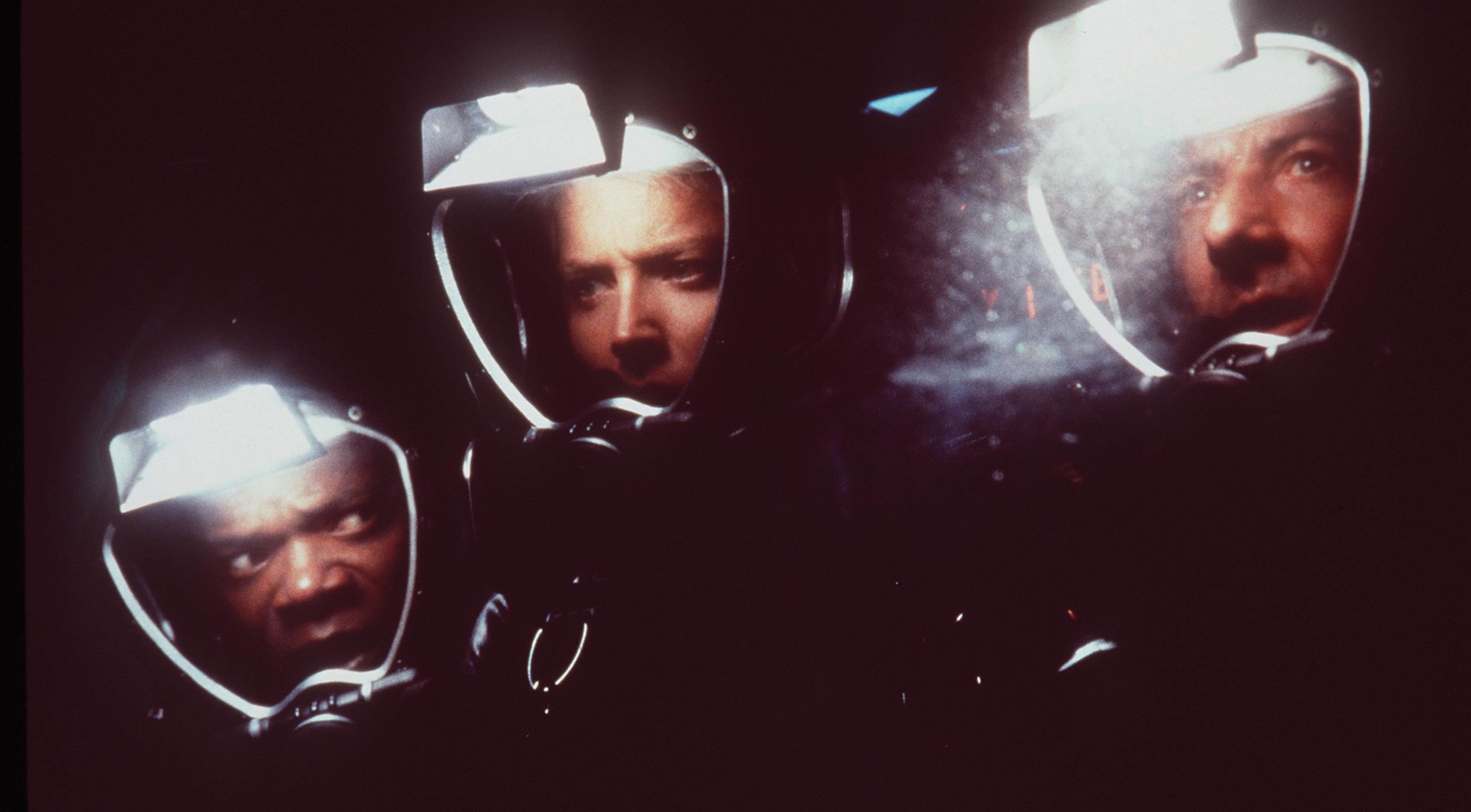
It is important to note that the six undersea thrillers of 1989-90 were not ever directly accused of plagiarising Crichton’s work. Indeed, despite his comments, Crichton – an author with a long and successful history of litigating in defence of his work in court – never made any known legal motions against them. In the case of some of the films, it is a matter of record that their development pre-dated the publication of Sphere. James Cameron was hard at work developing The Abyss while making Aliens (1986). The screenplay to Roger Corman’s Lords of the Deep was first drafted as early as 1980.
The most likely explanation appears to be is that a combination of Crichton’s novel and the announcement of Cameron’s film stimulated interest in the idea of an underwater science fiction film, and that multiple enterprising producers simply searched through their stock of abandoned screenplays to capitalize on the buzz.
Generally speaking, a good quality film can afford to wait until it is ready for release and find success on its own merits. In 1997 Michael Bay’s apocalyptic spectacle Armageddon grossed US$554 million in cinemas, despite premiering eight weeks after Mimi Leder’s similarly themed Deep Impact (which only grossed US$350 million). Likewise in November 1998 Jon Lasseter’s animated comedy A Bug’s Life earned US$363 million, even with Darnell and Johnson’s competing cartoon Antz grossing US$171 million a month earlier.
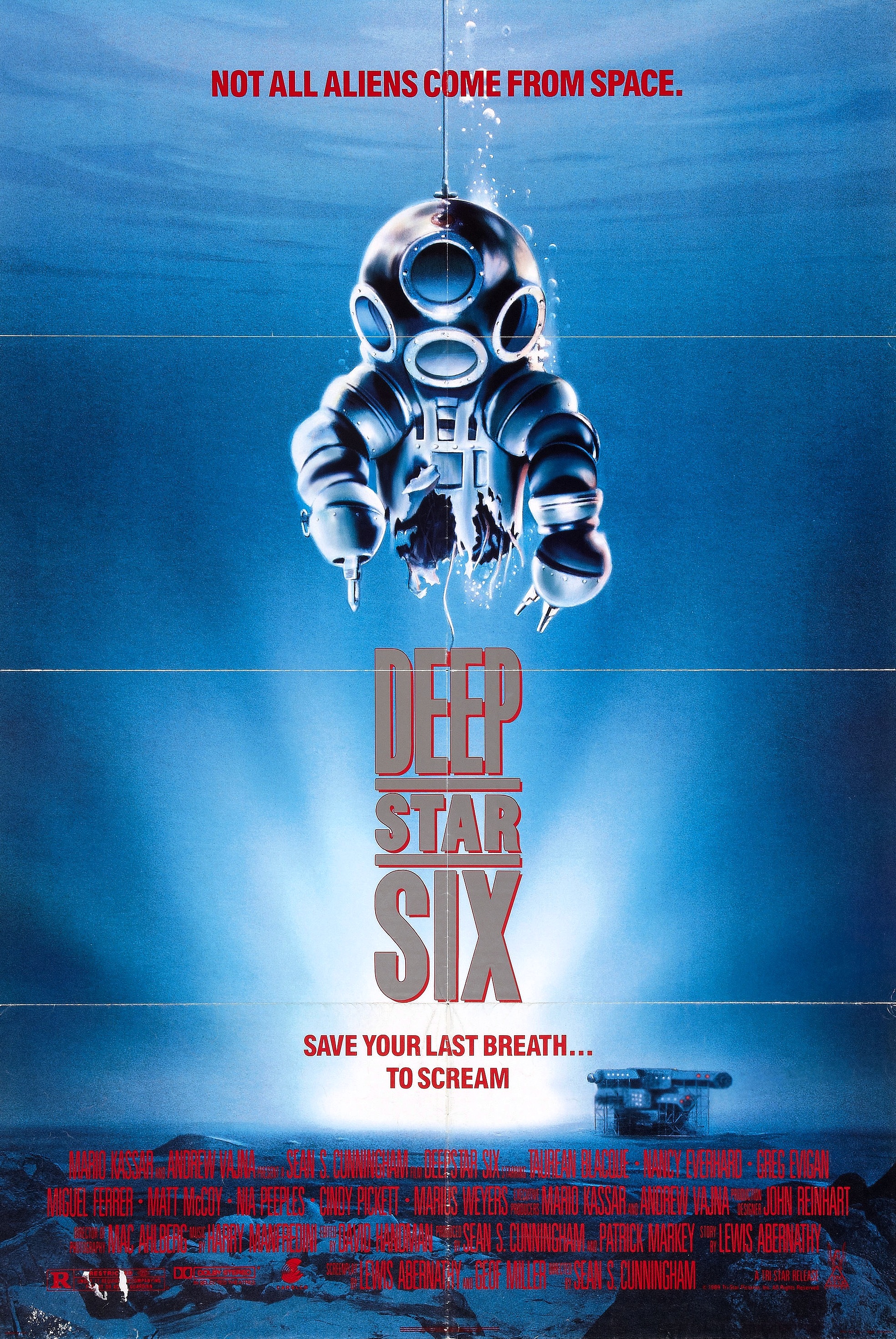 Simply put, in 1989 there was never any need for James Cameron’s generously-budgeted The Abyss to accelerate its schedule or shift its release date. The race to hit cinemas first was entirely between the cheaper productions, each vying to appeal to an apparent market before The Abyss could satisfy it. Deepstar Six, commissioned after The Abyss and Leviathan but released well before either of them, was the most rushed project of the set.
Deepstar Six was a Carolco Pictures production. A partnership between aspiring producers Mario Kassar and Andrew G. Vajna, Carolco had found great success pairing popular action stars with high-concept vehicles. The company had scored a major hit in 1982 by producing Ted Kotcheff’s First Blood, which starred Sylvester Stallone and led to two sequels by the time of Deepstar Six’s release. Other film projects had included the Arnold Schwarzenegger vehicle Red Heat and the jet fighter sequel Iron Eagle II (both 1988). Most of Carolco’s productions were distributed via Tri-Star Pictures – and this was also the case with Deepstar.
The idea for the film came from producer Sean S. Cunningham (Friday the 13th), who saw an opportunity for a quick and cheap horror film to cash in on the 1987 interest in undersea thrillers. Lewis Abernathy and Geof Miller wrote the screenplay, based on a story by Abernathy. Cunningham originally invited Robert Harmon, director of The Hitcher (1986), to helm the project but when Harmon quit during development, he chose to direct it himself.
The film focuses on a crew of 11 pilots and scientists working out the last week of their tour on the undersea military base Deepstar Six. When one scientist discovers an unexplored cavern, their superior orders for it to be collapsed with explosive charges – lest it delay an important nuclear storage project. When the resulting explosion frees a mysterious ocean-borne predator, a series of mishaps put the lives of the entire crew at risk.
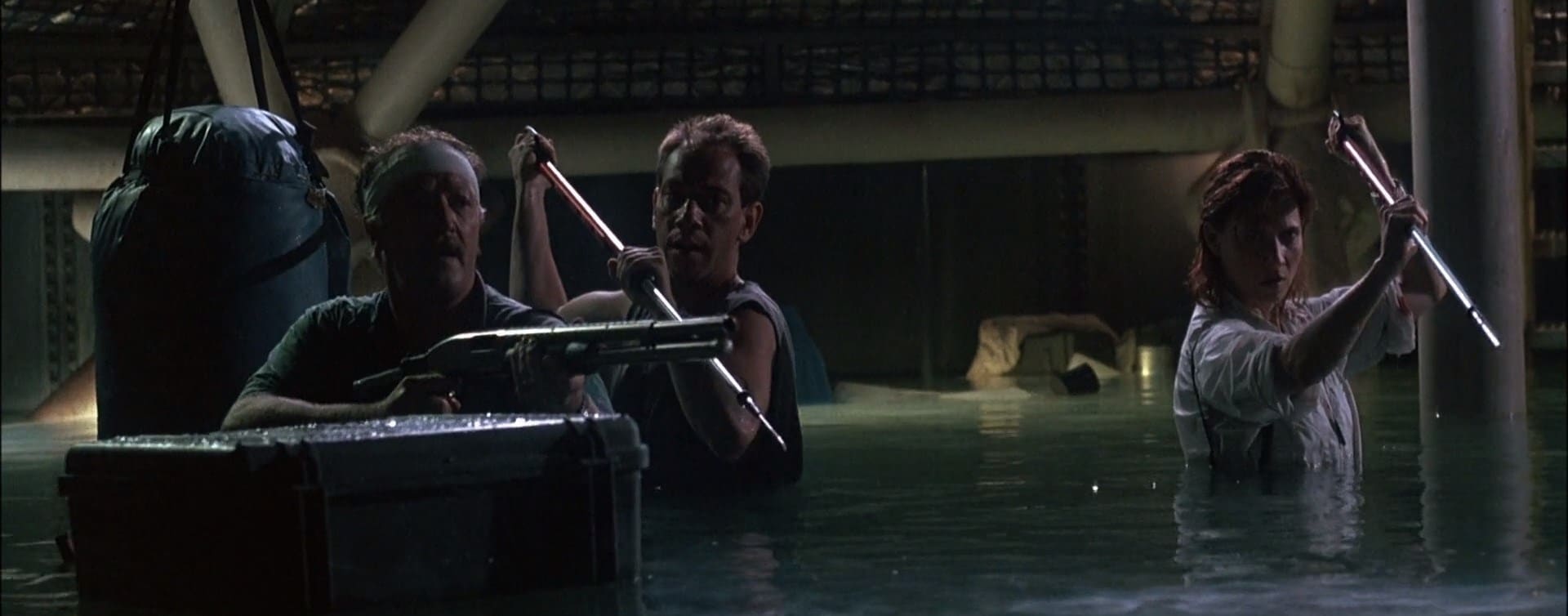
There is a utilitarian sense of Cunningham’s direction here. His film favours plot over style, and does an efficient job of introducing its characters, throwing them into crisis, and then watching them fight to survive against an enormous scorpion-like menace. Ridley Scott and James Cameron’s Alien films are clearly a major influence, although Cunningham lacks any of the design flourishes or inventive stagings that made those films so remarkable. It must be said there is not much Cunningham does wrong here, but at the same time there is little or nothing that stands out. This is a simple story, simply told. It is watchable but unmemorable.
The cast generally acquit themselves well and comprise a combination of serviceable unknowns and industry veterans. Miguel Ferrer is a stand-out, as is Hill Streets Blues alumnus Taurean Blacque. There is an unexpected nod to gender balance too, with Nia Peeples, Nancy Everhard, and Cindy Pickett all playing key leading roles.
It is all surprisingly restrained as well. In a film running 90-odd minutes, the monster does not actually reveal itself until the one-hour mark. Even then it is well-realised and shot in a manner that enhances its appearance rather than show off its shortcomings. While it is true that the film wobbles during a rushed climax, it still manages to wrap things up without ever seriously embarrassing itself.
With a film like this, expectations are key. Deepstar Six pretty much does what it sets out to do. There is tension and thrills, and a cast of panicky characters getting killed off one by one. There is nothing done here that is not done better in other films. B-cinema serves a purpose, however, and Deepstar Six serves it well. It is watchable. It is occasionally surprising. At its worst it can be laughed at. It is an important part of the entire 1989 Abyss phenomenon.
Deepstar Six was never considered a serious competitor to The Abyss, but its broadly similar subject matter – as well as early promotion for Leviathan – led 20th Century Fox to pull a teaser trailer for The Abyss out of cinemas out of concern it might be compared to the other productions. It was only re-instated once both competitors had been and gone from theatres.
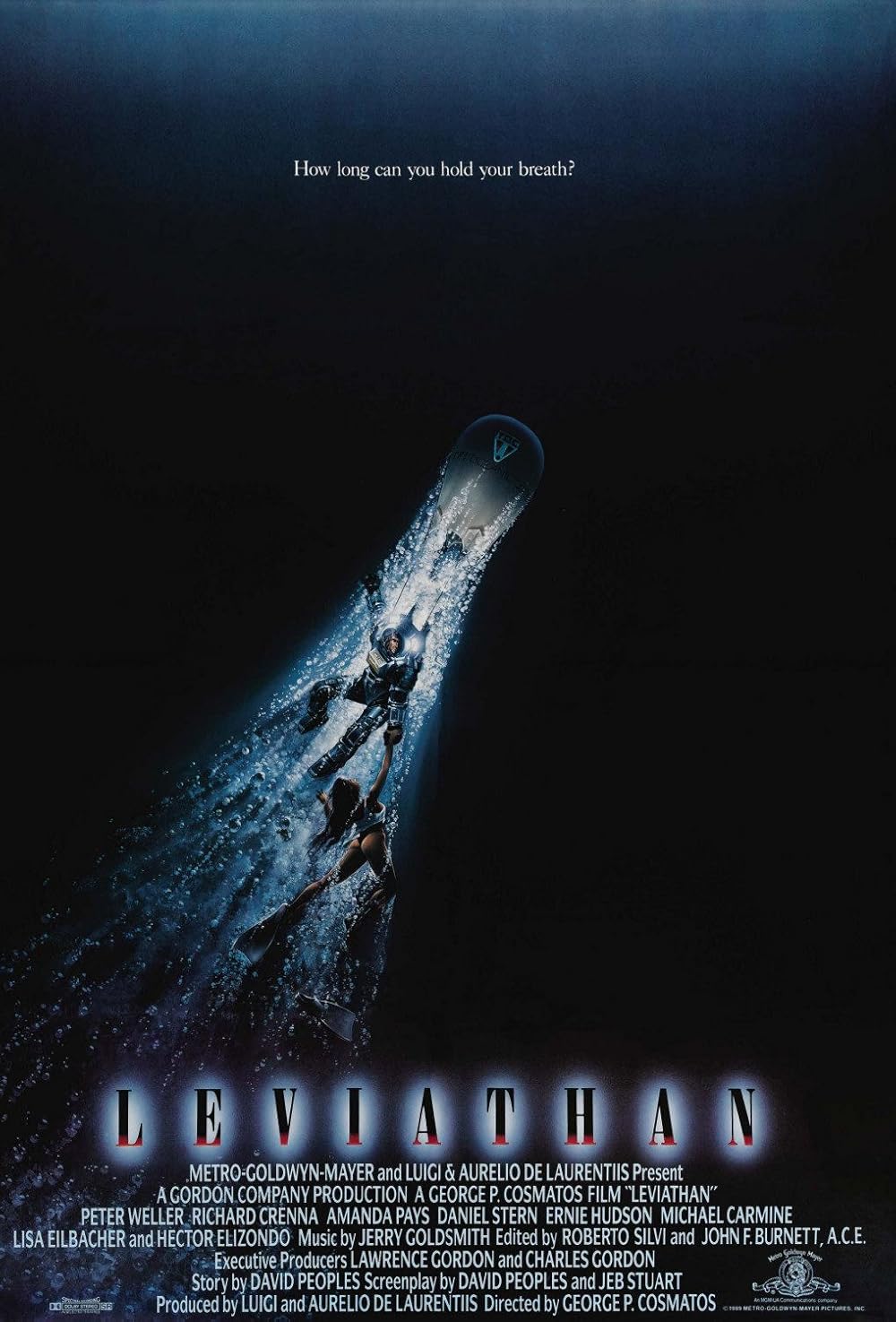
If any film was going to provide an actual sense of competition with The Abyss, it was going to be Leviathan. Budgeted at a reasonably healthy US$21 million, it boasted direction by George P. Cosmatos (Rambo: First Blood Part II) and a relatively starry cast including Peter Weller (Robocop), Ernie Hudson (Ghostbusters), Hector Elizondo (The Taking of Pelham One Two Three), and Richard Crenna (First Blood).
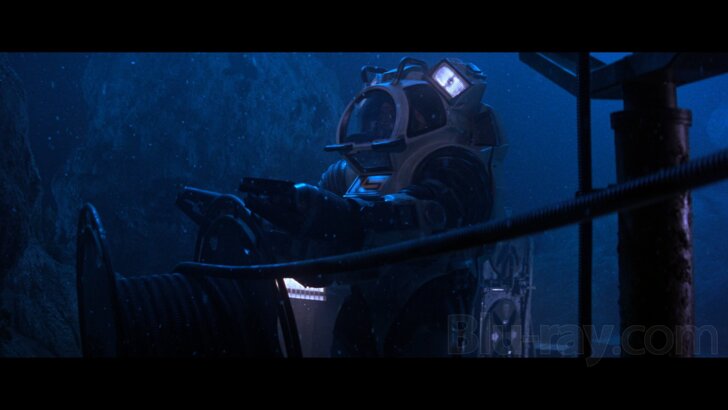
The film follows another deep sea facility and crew – this time mining silver from the ocean floor – that discover a scuttled Russian military vessel and a genetic experiment performed upon it. When the results of the experiment infect one of the facility crew, it transforms them into a mutated amphibious predator that threatens the others.
There is a sense that Leviathan was not intended as a cheap cash-in, but as a genre picture in its own right. It took Cosmatos and producing studio MGM time to put the project together. ‘We were the first,’ claimed Cosmatos in 1989, ‘Leviathan was conceived well before any of their other underwater films. Now suddenly everybody wants to make a movie like this. It took so much time to get the picture financed that we started late, so Deepstar Six opened before us.’[2]
Leviathan’s original screenplay was by David Webb Peoples, whose screenplay for Blade Runner (1982) had practically made him science fiction royalty. Peoples’ script was subsequently rewritten by Jeb Stuart (Die Hard). ‘Boy, that was not a happy experience for me,’ Peoples said, who had been hired by MGM to effectively write an Alien variant set underwater. ‘In this even more than in Alien, the creatures were never these big monsters. They were tiny almost invisible things that got inside of people. It was a very scary idea, but I was discouraged from writing it the way it ended up on screen.’[3]

The bulk of the film was shot at the famed Cinecitta Studios in Rome, with underwater scenes recorded off the coasts of Italy and Mexico. A large water tank in Malta was utilised for scenes on the ocean’s surface. ‘If you want to do scenes on the surface of the water,’ Cosmatos explained, ‘you can’t go in the middle of the ocean because it’s too windy and too cold, but this tank is very controllable.’[4]
Underwater scenes involving the actors were shot dry-for-wet, with camera filters and other special effects used to simulate the environment while the cast made deliberate slow movements to make it appear they were fully immersed. Cameras were deliberately over-cranked by 100 per cent to make the footage appear slower and the diving suits more cumbersome. Small bellows were inserted into the actors’ boots so that each step would blow out dust laid on the set floor.
The mutated creature was designed and operated by John Rosengrant, Alec Gillis, Richard Landon, Shane Mahan, Shannon Shea, and Tom Woodruff – who also performed the creature from inside the suit. The film’s effects sequences proved difficult to achieve, thanks to Cosmatos’ relative inexperience in the field and communication problems with the Italian-speaking crew. Stan Winston ultimately directed much of the film’s second unit work.
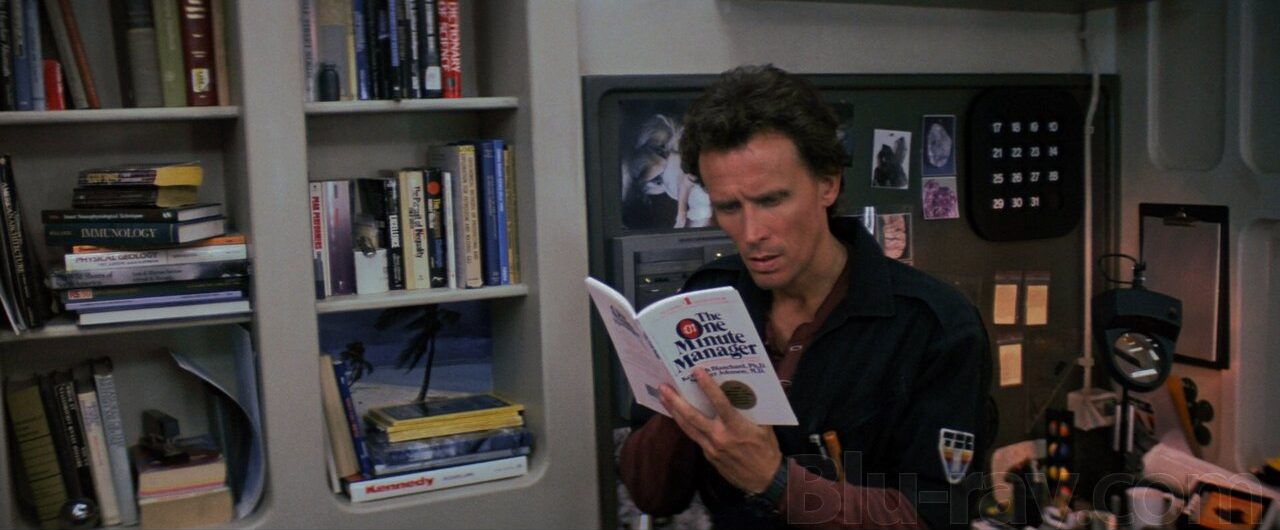
Leviathan’s narrative is serviceable at best, but it does receive a boost from the cast’s performances. Peter Weller gives his character Beck a relatively laconic air, and a sense of pragmatism. There is solid work by Daniel Stern, Amanda Pays, and Ernie Hudson as the facility’s working class crew. Richard Crenna does well with a slightly more complex character than the others; it is hardly a complex character, but it does benefit from a little extra nuance.
The creature effects are decent and are shot well to preserve suspense and add a little body horror to the mixture. The climax, it must be said, is less satisfying than its lead-up, and only makes sense if the viewer does not understand the laws of physics.
Ernie Hudson had his own idea on why the film’s climax struggled: ‘I think that the big part of why Leviathan maybe didn’t work with audiences back then was because of how my character gets suddenly eaten at the end. It was something that was definitely surprising- which is what I know George was going for- but I don’t think it was really a pleasant surprise for audiences at all. I understood that black actors in horror movies generally don’t make it through these things, but I always felt my death in Leviathan was particularly harsh just because I was really that last connecting character to the audience.’[5]
Leviathan opened in US cinemas on 17 March 1989 to a weekend gross of US$5 million, somewhat below that of competing release Fletch Lives. Within three weeks it was already out of theatres, having failed to recoup its budget.
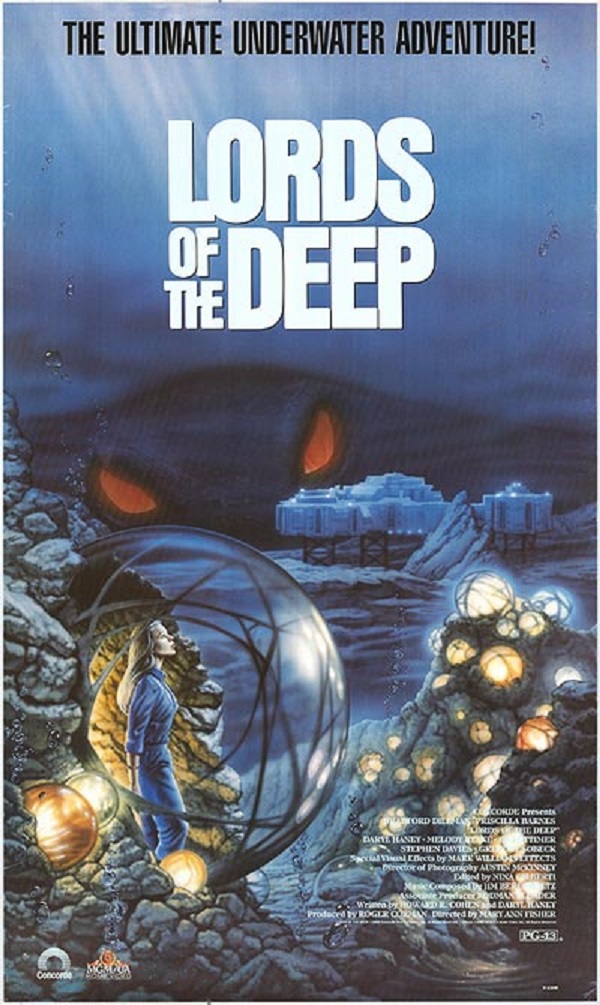
Lords of the Deep opened the following month; a low-budget blink-and-you’ll-miss-it affair destined for a life on home video. Its producer, Roger Corman, professed total ignorance of the rival films: ‘It’s funny how these things are almost in the air. I don’t think they were aware of ours, and I know we weren’t aware of the others.’[6]
Directed by Mary Ann Fisher, Lords of the Deep sees an undersea laboratory come under attack when its crew encounter mysterious ray-like creatures living underneath the ocean. The film was originally announced all the way back in 1982 but had been shelved indefinitely. Corman claimed its revival in 1989 was due to his coming up with new ideas for the concept, but it feels something of a stretch given the surrounding competitors.
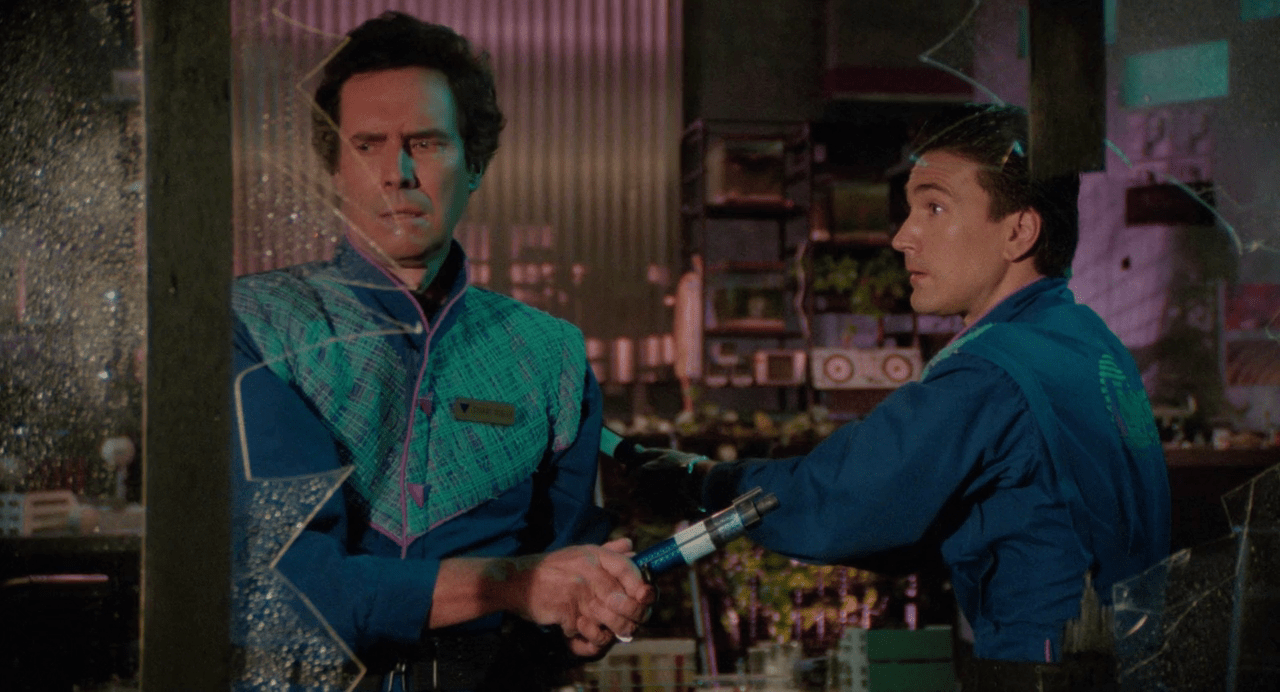
Mary Ann Fisher had worked with Roger Corman for some years, including as an associate producer on his 1980 space opera Battle Beyond the Stars. By coincidence, a key art director and visual effects technician for that Corman production was a young James Cameron. Lords of the Deep marked Fisher’s only directing assignment; she did not direct a second film.
Lords of the Deep is appallingly cheap; the sets are unconvincing and the visual effects somewhat farcical. The costuming is particularly odd, with the cast dressed up in what look like tartan and lilac leisure suits. The performances, led by Priscilla Barnes and Bradford Dillman, are almost entirely unsupported by script or direction. So egregious is the production that it made it to an episode of the popular comic commentary series Mystery Science Theatre 3000: a clear badge of honour for the ‘so bad it’s good’ crowd.
One would never guess it from the finished film, but the second unit director of photography was Janusz Kamiński. By 1991 he photographed cult music picture Cool as Ice, and in 1993 he shot Steven Spielberg’s Schindler’s List – winning an Academy Award for his efforts.
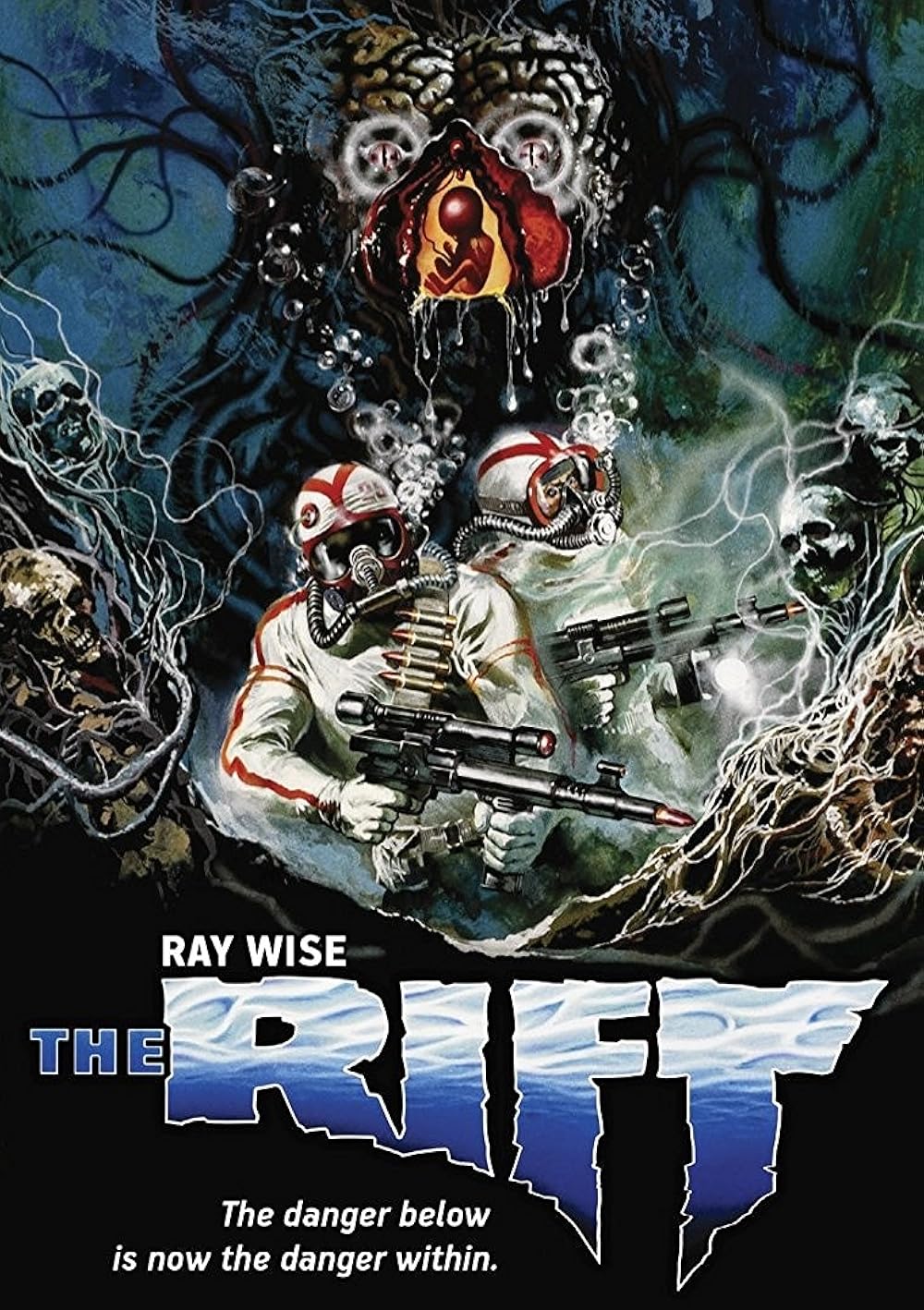
There is ‘so bad it’s good’, and then there is the simply very bad. The Rift, titled Endless Descent in some markets, was delayed by enough production problems that it missed 1989 entirely and limped into release during 1990. A Spanish-American co-production, it debuted in Spain in March and the USA in October.
Writer/director Juan Piquer Simón operated his own independent production company and had made his career with low-budget science fiction and horror films including Pieces (1982), The Pod People (1983), and Slugs: The Movie (1988). The Rift attracted some decent screen talent, including R. Lee Ermey and Ray Wise – possibly its only element with merit. The film follows a submarine engineer (Jack Scalia) unwillingly pressed back into service when a vessel disappears during a deep-sea mission.
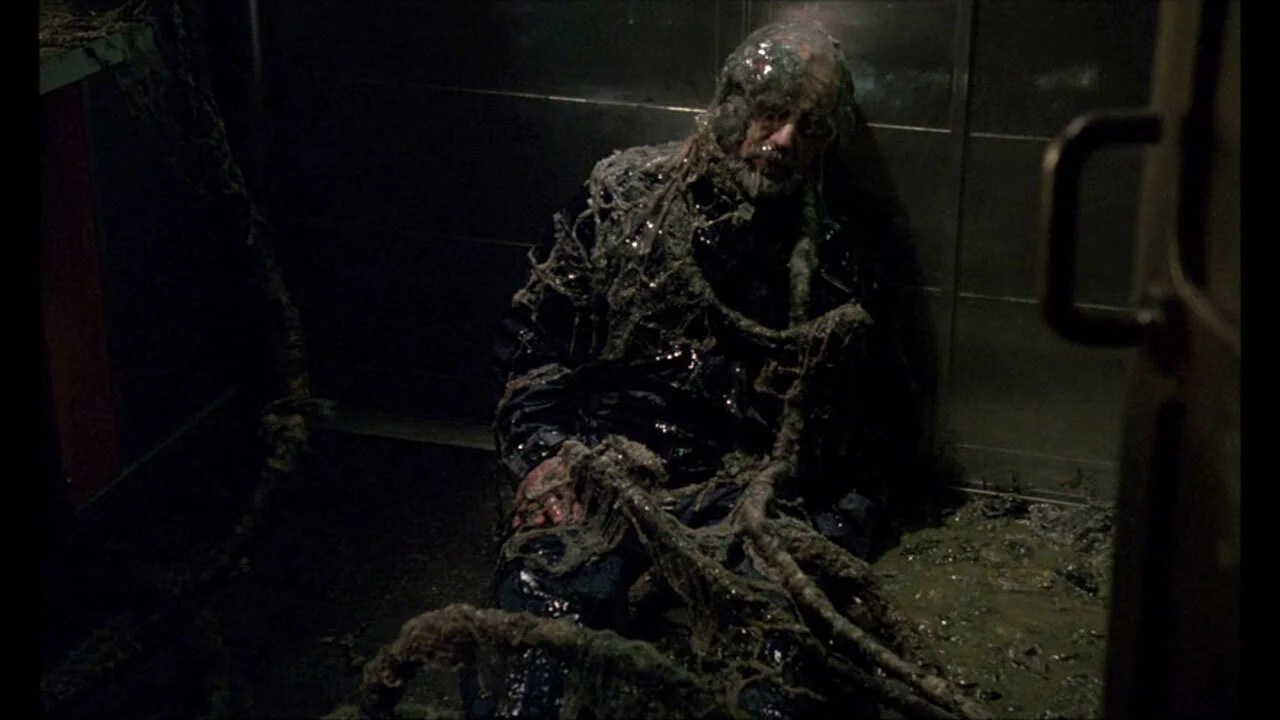
There is no escaping how cheap The Rift looks. The submarine interiors resemble a kitted-out office building. Its exterior resembles a cheap model of the Beatles’ Yellow Submarine. Everything is designed – set, props, costume – without a modicum of creativity or effort. This is not an insurmountable problem. A decent screenplay and some thoughtful performances can overcome any budgetary limit or wobbly set. Unfortunately, Simón’s script is not only entirely generic, but it also fails at the most basic requirements (a submarine hitting an iceberg 25,000 feet below the ocean’s surface is one choice example).
Some marquee value is gained from R. Lee Ermey and Ray Wise. Ermey, of course, is not an actor with a great deal of range. Wise is stronger, but he knows the kind of film he is in and performs accordingly. Everybody else is either disengaged, or a Spanish featured extra struggling to act in the English language.
It is strange that so many small production companies either noticed the success of Sphere or heard talk of The Abyss and assumed that undersea thrillers were going to be the next big thing in popular entertainment. The Abyss itself underperformed against 20th Century Fox’s expectations. Not one of the smaller competitors even broken even. Collectively these films stand as an odd quirk of late 1980s cinema: ill-conceived and by-and-large poorly made, they present the viewer with a bizarre curiosity.
[1] Frederick S. Clarke, “Lords of the Deep”, Cinefantastique, May 1989.
[2] Frederick S. Clarke, “Lords of the Deep”, Cinefantastique, May 1989.
[3] Anonymous, “Interview: David Webb Peoples”, That Shelf, 2 April 2014.
[4] Bob Morrish, “Leviathan”, Cinefantastique, May 1989.
[5] Heather Wixson, “Stan Winston Week: Celebrating Leviathan with Ernie Hudson, Tom Woodruff Jr. & Exclusive Photo Gallery”, Daily Dead, 9 July 2014.
[6] Frederick S. Clarke, “Lords of the Deep”, Cinefantastique, May 1989.




 FictionMachine.
Leave a comment