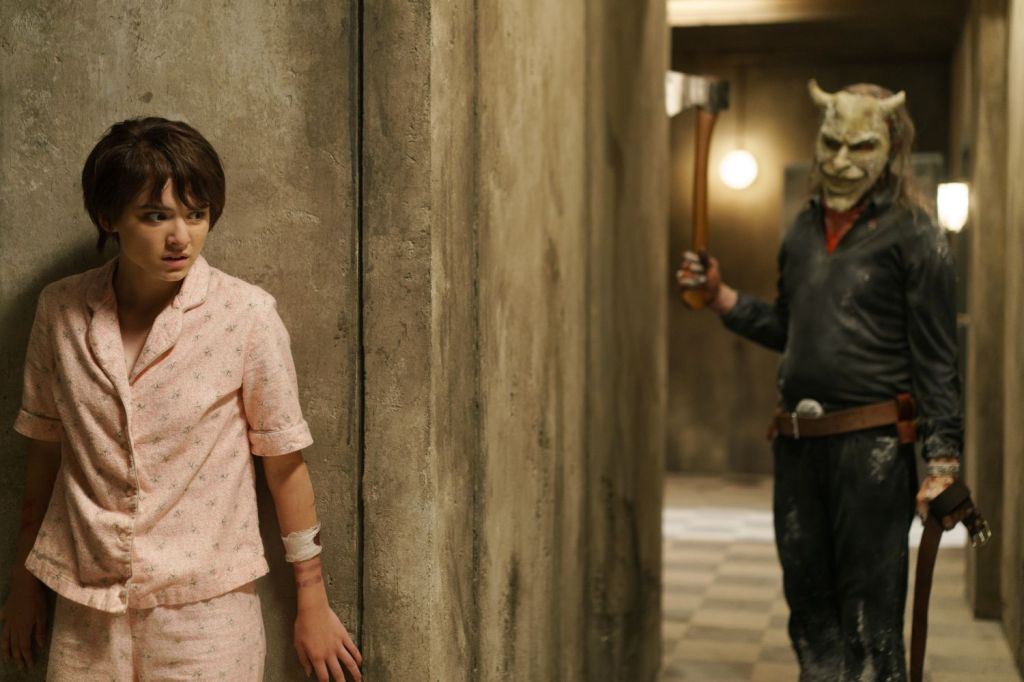
Scott Derrickson’s Black Phone 2 (2025) is a rock-solid example of how to take a highly self-contained horror film, without any clear avenues for extensions or follow-ups, and produce an effective sequel anyway. While imperfect, and certainly inferior to Derrickson’s 2021 original, it is still an effective and often atmospheric piece of supernatural horror.
Four years after Finney Blake (Mason Thames) killed local serial killer the Grabber (Ethan Hawke), he remains tormented by random telephone calls from the dead. When his sister Gwen (Madeline McGraw) receives a call from their mother almost 30 years in the past, it sets off their journey to a mountainous youth camp with a dark past and a history of unsolved murders.
Black Phone 2 has an effective solution to the problem of the Grabber being killed off in the previous film, which is to bring him back as a vengeful ghost able to attack people through their dreams. While the idea is developed a little more obliquely than it was in Wes Craven’s seminal horror film A Nightmare on Elm Street (1984), it does render the Grabber close enough to that film’s Freddy Krueger that Craven’s estate must have at least considered calling their lawyers. There is obviously a line between plagiarism and what we will call ‘enthused pastiche’, but it is debatable on what side of that line Black Phone 2 falls. For all practical purposes, it is a problem for litigators; for audiences, this is entertaining and strikingly realised stuff.
Derrickson employs a nice sort of grainy film filter for the various dream sequences, which brings to mind his underrated 2012 horror film Sinister. Here the filter has an almost Brechtian effect: emphasising the different states of reality in the story while simultaneously emphasising the artificiality of cinema generally. There is also a lot of digital work done here in terms of virtual locations and CGI backdrops, that give key exterior scenes an artificial quality that for once feels intentional. Add in some strong design work – particularly the Grabber’s undead transformation – and Derrickson has yet another beautifully crafted, atmospheric work on his hands.
It is effective, but it is also flawed. While the narrative plays inventively and looks fantastic, the actual line-by-line dialogue is shockingly bad. Derrickson and co-writer C. Robert Cargill have filled it with early 1980s teen slang (“Choice!”) that jars rather than adds anything. People spent a lot of time saying very obvious things at obvious times. There is simply very little nuance or creativity, save for key lines by the Grabber that feel more crafted for a theatrical trailer than for the film itself. It all lets down the cast, particularly Mason Thames and Madeline McGraw – who struggle to emerge from underneath them with their characters intact.
It is an enjoyable film, but that damned dialogue certainly makes it a frustrating one as well.

 FictionMachine.
Leave a comment