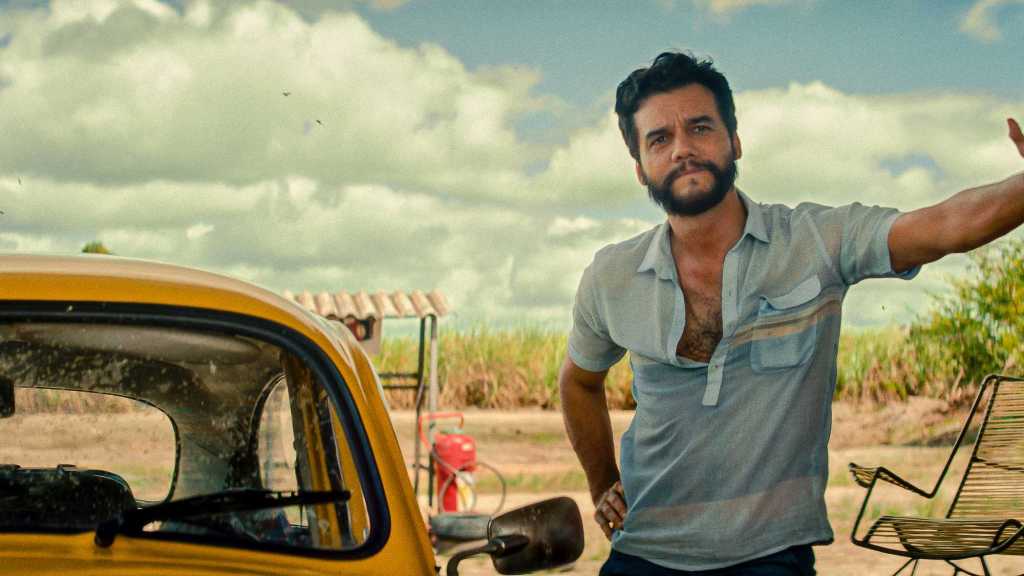
Kleber Mendonça Filho’s new feature The Secret Agent is finally hitting Australian cinemas, riding a wave of critical acclaim and a growing pile of international film awards. It marks the first must-see film of 2026; it feels guaranteed that, come the end of December, it will find a comfortable niche in more than a few ‘year’s best’ lists. This is the work of a master filmmaker. The film marks the pinnacle of a four-film journey from Mendonça Filho’s 2012 debut Neighbouring Sounds, through the drama Aquarius (2016) and the thriller Bacurau (2019), and now to this – his most mature and well-crafted work to date. If fans of foreign cinema are not already following his career, they will be after this.
The film tracks Marcelo (a superb Wagner Maura) as he travels to Recife in northern Brazil in 1977. The country strains under a military dictatorship, with rich elites being supported by a deeply corrupt police force. It is clear that Marcelo is hiding from the authorities; it is also clear that he is infiltrating a government records office for a secret purpose. Slowly unravelling the threads that link the film’s elements together is a core part of The Secret Agent‘s appeal.
Mendonça Filho constructs a vivid and detailed recreation of late 1970s Brazil, from the political environment down to street-level detail. It gives the film an incredible grounded reality, and ably supports both the narrative and the wide range of fascinating characters. It is a film built meticulously from the ground-up: the environment supports the richness of the characters, and those characters motivate a gripping and suspenseful story. It all plays out with a measured, careful pace, and an inventive, unexpected story structure.
It is difficult to recall the last time that a feature film benefitted from such a universally effective and distinctive cast of actors. The acclaim has centred, quite rightly, on Wagner Moura’s profoundly three-dimensional leading turn, but every supporting player down to key extras on screen have a tremendous vividity to them. It is wonderful to see the late Udo Keir one final time as a German tailor, cruelly mocked and cajoled by Recife’s vain and unpleasant chief of police (Robério Diógenes). Tânia Maria is charming as the elderly Dona Sebastiana, who operates a halfway house for runaways and political refugees. Roney Villela is captivating as a cruel killer-for-hire, sent from the south to track down and eliminate Marcelo before he can leave the country.
The soundtrack, a combination of period-appropriate songs and a Tomaz Alves Souza and Mateus Alves score, is rich and evocative. The film has an unexpected love for popular cinema, as expressed through Marcelo’s father-in-law (Carlos Francisco), a theatre projectionist. It also acts as a love letter to fathers and their sons, and the relationship between them.
Films of this quality and complexity do not arrive in cinemas too often, and when they do they deserve to be widely seen and keenly treasured. The Secret Agent is going to sit on the landscape of masterpiece cinema for years, while Mendonça Filho has guaranteed himself a global audience for the rest of his career.
The Secret Agent is in previews this weekend before opening on 22 January.

 FictionMachine.
Leave a comment