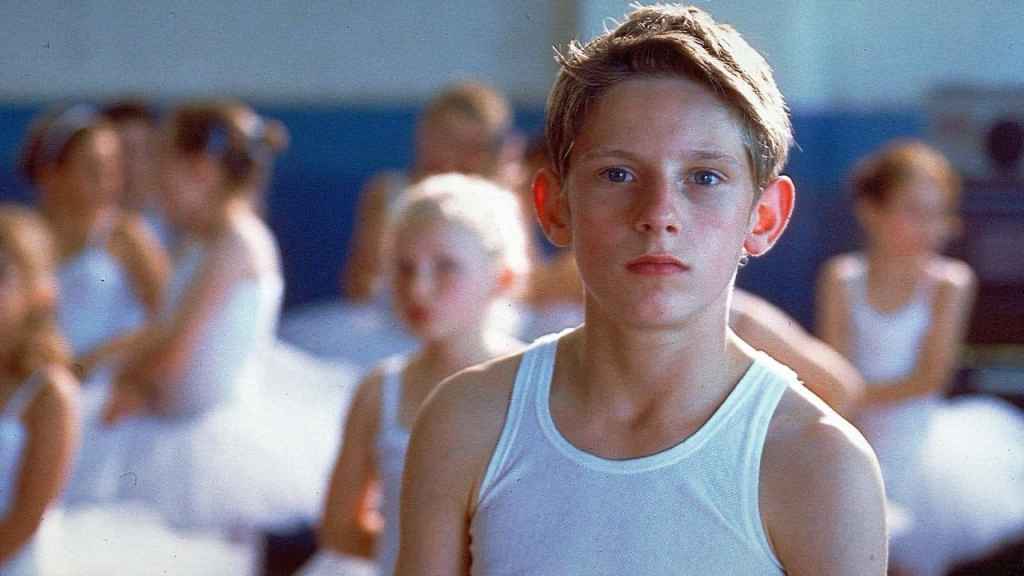
The economic policies of Margaret Thatcher’s United Kingdom cast a long shadow over British popular culture. You can find it in the music and literature of the time, as well as in British national cinema. The sheer rage at how Conservative political decisions affected working class people extended well beyond Thatcher’s tenure as well. In the late 1990s and early 2000s there was an apparent wave of popular cinema that dealt with common themes of mass unemployment, class conflict, declining industry, and damaged communities.
These themes form the backdrop of Stephen Daldry’s superb 2000 drama Billy Elliot. While the core focus on the film on uplifting themes like choosing one’s own destiny and artistic expression, its situation within the 1984 miner’s strike delivers a texture and a tone that elevates the entire film. A quarter-century on, this remains one of the best British films ever made.
Billy Elliot (Jamie Bell) lives in Country Durham, and is the younger son of a family of coal miners. While the ongoing miner’s strike pushes the entire community into poverty – and brings about violent police reprisals – Billy strays from his youth boxing club to the ballet class taught by the irascible Mrs Wilkinson (Julie Walters). When Billy proves to have a talent for dance, it brings him into opposition with his striking and traditionalist father (Gary Lewis).
I will always feel a strong personal link to Billy Elliot. While I did not grow up in an English coal mining town, I did grow up in an Australian country town where the iron ore mined inland would be shipped offshore. Like Billy, I found a strong affinity for dance as a child. The challenges and prejudices Billy faces during his story are ones that I both recognise and feel keenly. I can see the emotional truth of his experience, and it feels real and immediately believable. Lee Hall’s screenplay, which adapts his own play Dancer, is well-developed and intelligently measured. While the specifics of the plot may be about Billy wanting to dance, it is ultimately about relationships: between Billy and his older brother, Billy and his disapproving father, and Billy and Mrs Wilkinson.
The strikes hang heavily over the action. The emotional toll is palpable, and the daily struggles and sacrifices contrast smartly with the more whimsical dance elements. This is, in the end, a film about characters, and each is well-crafted and sympathetically developed. It is rare for a film to develop without an actual villain figure – here the closest thing to it is Billy’s father Jackie, and Lee’s screenplay makes him identifiable, relatable, and ultimately enormously big-hearted. Gary Lewis’ performance in the role is truly exceptional, as is Jamie Bell’s as Billy himself. Stuart Wells, another juvenile performer like Bell, delivers a striking and sensitive performance as best friend Michael. It is a rare and impeccable depiction of young queerness, and delivered with sensitivity and a pleasant matter-of-factness.
Billy Elliot is far from the only British film to tackle economic and social themes of the 1980s and its aftermath, but it remains one of the very best ones. This is crowd-pleasing, uplifting cinema for a mainstream viewership, and achieves its goals with a tremendous amount of enjoyability and charm.

 FictionMachine.
Leave a comment