Either Deathstalker (2025) is a film for you, or it is not. You are either its target market, or you are not. Topics such as tone, quality, or subject matter are honestly irrelevant. This new fantasy adventure film from director Steven Kostanski is a pitch-perfect construction for an incredibly specific audience. That audience will adore it; you may or may not feel the same, but it is important to understand that your response will not be dictated by the film but by your personal taste. This is instant cult cinema: produced by a world of affection and creativity, doing precisely what was intended, and it will either suit your tastes marvellously or it will not suit them at all.
The early 1980s saw two converging phenomena. The first was the sudden popularity of sword-and-sorcery via theatrically released films like Excalibur (1981) and Conan the Barbarian (1982). The second was the rise of home video as a mainstream technology, suddenly opening an enormous market worldwide for watchable content. To cater to a mass audience and its voracious appetite for films on VHS, independent or low budget producers could profit from making and releasing all manner of cheap movies and bypass a theatrical release altogether. Put the two trends together, and you get a raft of cheaply-made fantasy films through the 1980s. They were terrible, but widely loved in the absence of anything better. The kids that grew up with The Lord of the Rings trilogy do not know how good they had it.
The original Deathstalker was a 1983 Argentinian-American co-production directed by James Sbardellati and distributed by Roger Corman’s New World Pictures. It actually did score a US theatrical release, scoring USD$5 million in the process, but its reputation was absolutely made on home video.
Steven Kostanski’s 2025 Deathstalker is nominally a remake, but really it just borrows a title from Sbardellati’s film and instead acts as a general love letter to the fantasy films of its time. It stars Daniel Bernhardt as the titular character: a swordsman and looter who becomes magically chained to a cursed amulet and must venture across a fantasy kingdom to break its hold on him. The film also features Laurie Field and Patton Oswald as the wizard Doodad, Christina Orjalo as the thief Brisbayne, and Paul Lazenby as the villainous Jotak.
The story is somewhat subservient to whatever is going on moment-to-moment. In practice Deathstalker is rather like watching somebody else play Dungeons & Dragons. Shot in Canada, the film largely features actors performing their roles with all the gravitas of your friend’s dining room on a Saturday night. That might sound like a condemnation: it’s not, but the result is certainly a little unusual.
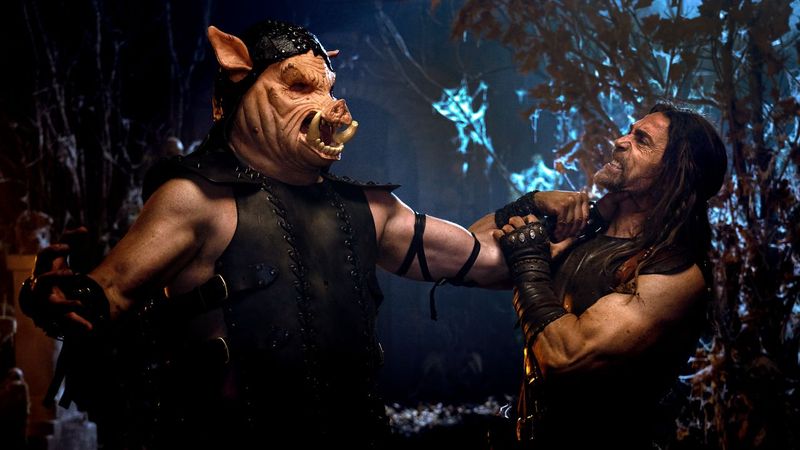
The leads encounter all manner of mercenaries and monsters on their journey, and if you have seen Kostanski’s 2020 film Psycho Goreman – and you really should have – you will have a good idea of what to expect. A wild combination of CGI, rubber-suit monsters, stop motion armartures and plasticine combine to give Deathstalker a hand-crafted, child-like aesthetic that is simultaneously funny, charming, and patently ridiculous. At the same time it is almost irresponsibly gory, with a remarkably consistent line in blood-spewing decapitations.
To be completely fair, Deathstalker does extend a little longer than it needs to be, but for its fans I wonder if any amount of self-aware, bloody mayhem would be sufficient. In the end it is a perfect presentation of something very niche, and more than a little bizarre. We will all, inevitably, make of it what we will.


 FictionMachine.
Leave a comment