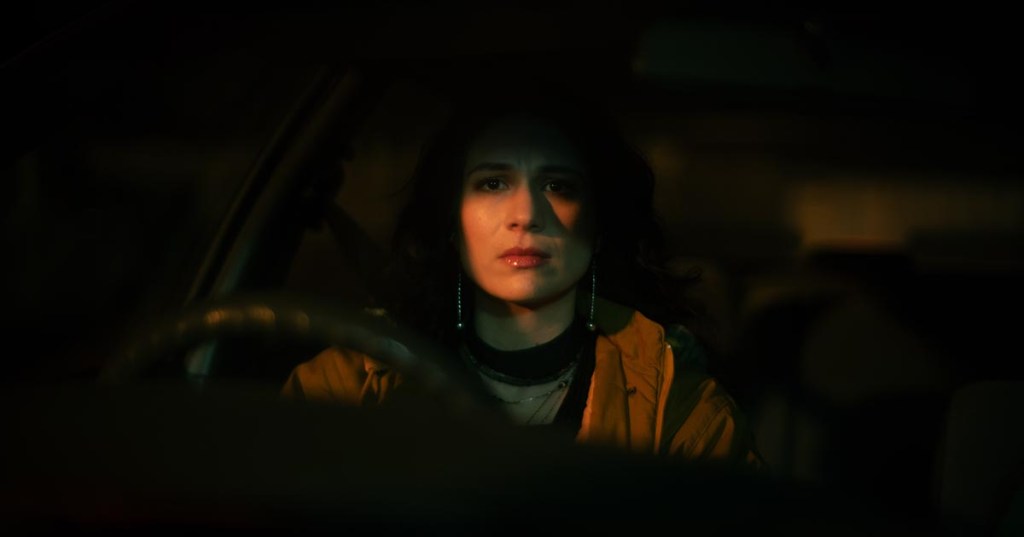
New Australian drama Westgate struggles a little in the writing, but effective direction by Adrian Ortega and a winning central performance help lift it above the crowd. This is powerful, resonant stuff, boosted with vivid local relevance and cultural detail. This is not just an Australian film – it’s a Melbourne one.
In 1999 West Footscray Netta (Sarah Nicolazzo) struggles as a single mother to afford rent and bills and care for her chronically ill child Julian (Max Nappo). Facing an ultimatum for her landlord, Netta travels through a harrowing 24 hours in the attempt to raise the money she owes.
I am not saying that the filmmakers of the world make too many movies about struggling single mothers, but it must be noted that there are an awful lot of films out there that broadly follow the same narratives and themes. They may vary based on cultural or national settings, but the same key elements keep re-appearing. There is usually a semi-absent ex-husband or partner, cut off from the family by their broken relationship. The single mother almost always has one child, and it is usually a son. Relationships with parents is always fraught, as are those with current or former employers. Individual filmmakers can vary these elements a little, or mix up the specific emphasis on one part or another, but all in all there is a surprisingly common formula for these dramas that seems difficult to advance.
When it comes to Ortega’s screenplay, Westgate does struggle. A lot of Netta’s journey is spent either pensively smoking or shouting on the telephone. The film’s title refers to a family tragedy relating to Melbourne’s famous Westgate Bridge, but it never quite resonates in a manner that feels worthwhile.
Ortega’s direction, however, is excellent. A 4:3 aspect ratio keeps the story feeling aggressively pent-up and claustrophobic. Small character details pop out throughout the film, transcending the storyline and offering something much more well-observed and detailed. It is a film in which actors can shine, because Ortega has directed it in a matter that lets a pause or facial expression mean more to the audience that dialogue on either side of it.
Sarah Nicolazzo dominates the film, and does not waste the spotlight. There is a realism to Netta, and an angry and brittle quality that feels well grounded in emotional truth. She does a particularly strong job emotionally linking Netta to her son Julian, and together Nicolazzo and Max Nappo build a very real and engaging relationship. If Westgate feels like a cut above a typical Australian urban drama, and I believe it does, it is because of their performances and Ortega’s sensitive direction of them. Supporting turns are, across the board, realistic and well grounded.
This film boasts an exceptional sense of place and time, not just generally but specifically: if one has any familiarity with Melbourne’s western suburbs at all it practically leaps off the screen at you. Even within its tight visual frame, Westgate finds moments for unexpected grace. Having made a successful premiere at this year’s Melbourne International Film Festival, it now faces the challenge of finding a broader audience on Australian screens more generally. It absolutely deserves to find it. This is high quality cinema, lightly flawed but beautifully executed.
Westgate is screening at the 2025 Melbourne International Film Festival. Click here for more information. Full disclosure: I have worked with Sarah Nicolazzo in the past on a 2016 stage production of Coriolanus. She was excellent then; she is even better here.
 FictionMachine.
Leave a comment